

Our Research / Gravity & amplitudes
When two black holes spiral into each other a billion light-years away, detectors on Earth register a faint ripple that lasts a fraction of a second. Reading that ripple requires knowing, to exquisite precision, how two black holes pull on each other. UCLA theorists found that the fastest route to the answer runs through the mathematics of particle collisions, and through a surprising fact: gravity behaves like two copies of the force that holds protons together.
A precision problem in the sky
Gravitational-wave observatories such as LIGO hear black holes and neutron stars as they orbit, spiral inward and merge. To pick a real signal out of noisy data, and to tell what produced it, astronomers compare the data against a catalogue of predicted waveforms. Every prediction rests on the question Newton answered for the planets: what is the force between two bodies? For black holes moving at a sizable fraction of the speed of light, Einstein's equations make that question very hard.
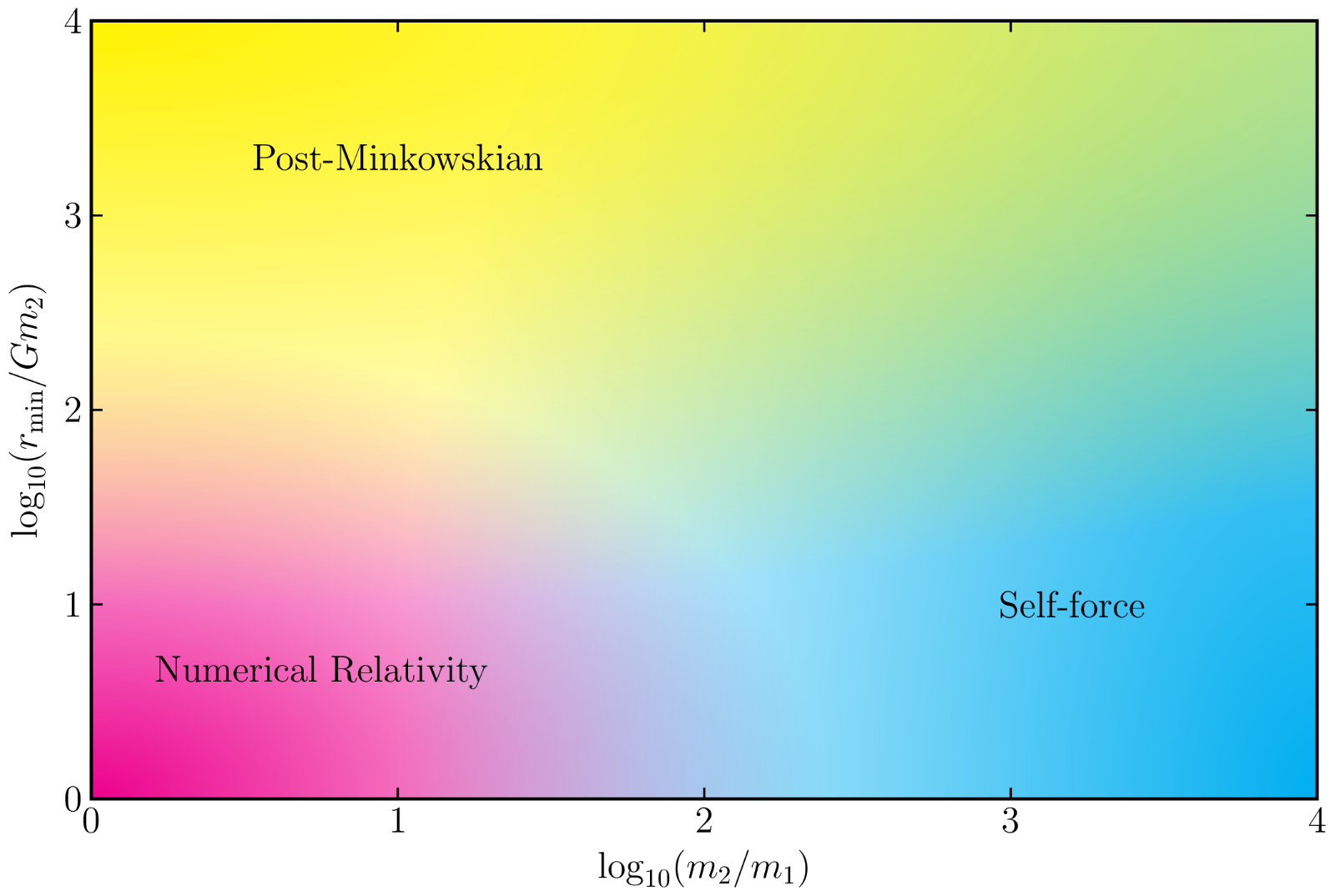
Supercomputer simulations can follow the final, violent merger, but they are expensive, and the long inspiral that precedes it is best handled with approximations organized as a series of corrections. Future detectors, including the space-based LISA mission and next-generation ground observatories, will demand theory far more accurate than what exists today.
Borrowing tools from the collider
For decades, Zvi Bern and collaborators built shortcuts for computing scattering amplitudes, the numbers that give the probabilities of outcomes when particles collide. In 1994 Bern, Lance Dixon, David Dunbar and David Kosower introduced the unitarity method: instead of adding up thousands of Feynman diagrams, one assembles a complicated quantum calculation from simpler, physical pieces glued together. The method became a standard tool for precision predictions at the Large Hadron Collider, and in 2014 Bern, Dixon and Kosower shared the American Physical Society's J.J. Sakurai Prize for this line of work.
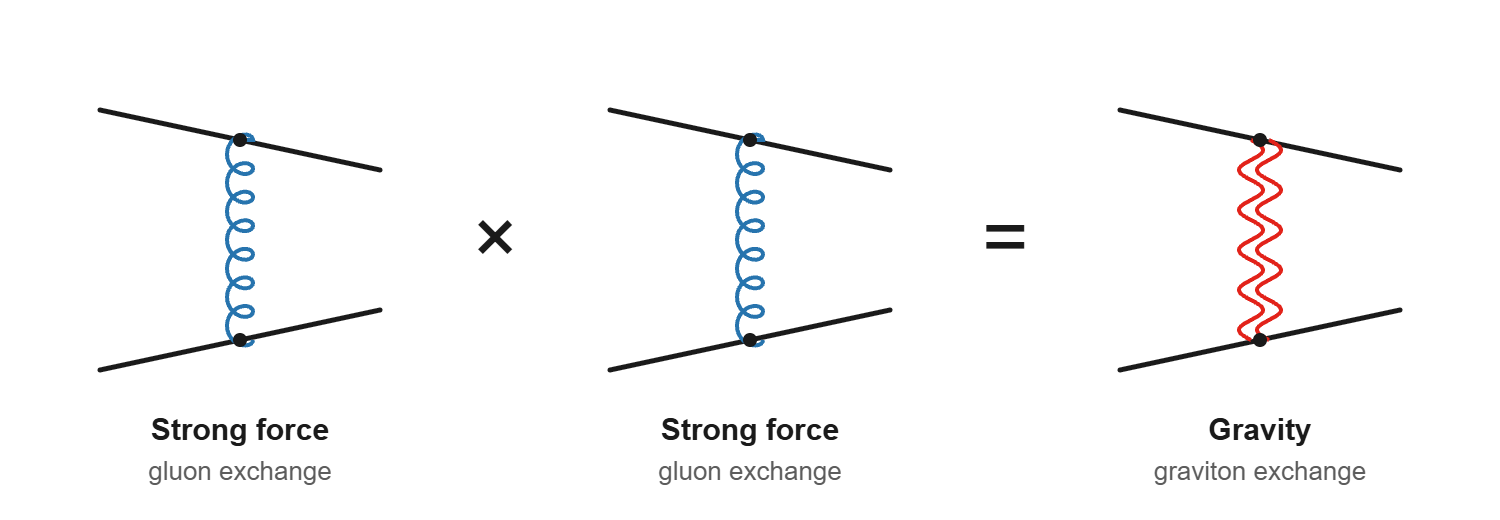
In 2008 Bern, John Joseph Carrasco and Henrik Johansson noticed a hidden pattern in the strong force: the rules governing particles' "color" charges have a mirror image in the rules governing their motion. In 2010 they proposed that this holds at every quantum (loop) order: once the duality is made manifest, gravity's amplitudes can be built by taking two copies of the strong-force ones. This "double copy" turned a relation known since the 1980s for the simplest string-theory processes into a working recipe for quantum gravity calculations at higher orders. Gravity calculations that were hopeless by brute force became manageable, because the hard work could be done in the simpler theory first.
From quantum scattering to black-hole orbits
The leap to astrophysics came from treating two black holes, seen from far enough away, as two heavy particles that scatter off each other by exchanging gravitons. Their classical motion can then be read off from a quantum scattering amplitude. In 2018 Mikhail Solon, with Clifford Cheung and Ira Rothstein, worked out how to convert such amplitudes into the potential energy between two bodies, using effective field theory, the language that separates physics at different distance scales.
The natural bookkeeping here is the post-Minkowskian expansion: a series in powers of Newton's constant G that, unlike the traditional slow-motion expansion, is valid at any speed. In 2019 Bern, Solon and colleagues (Cheung, Radu Roiban, Chia-Hsien Shen and Mao Zeng) combined unitarity, the double copy and effective field theory to obtain the conservative dynamics of two spinless black holes at third order in G, the first calculation at that order. The result agreed with every overlapping piece already known from other methods. In 2021 the team, joined by Julio Parra-Martinez and Michael Ruf, pushed to fourth order, and later that year completed it by including the "tail effect", in which emitted gravitational waves scatter back off the curved spacetime and tug on the binary.
How black holes stretch and squeeze
Black holes are not rigid. When a companion's gravity pulls on one, it responds, and that response leaves fingerprints in the waveform. Physicists summarize it with "Love numbers", named after the mathematician A.E.H. Love. For a black hole sitting in a static tidal field these numbers vanish, but in a changing field they do not.
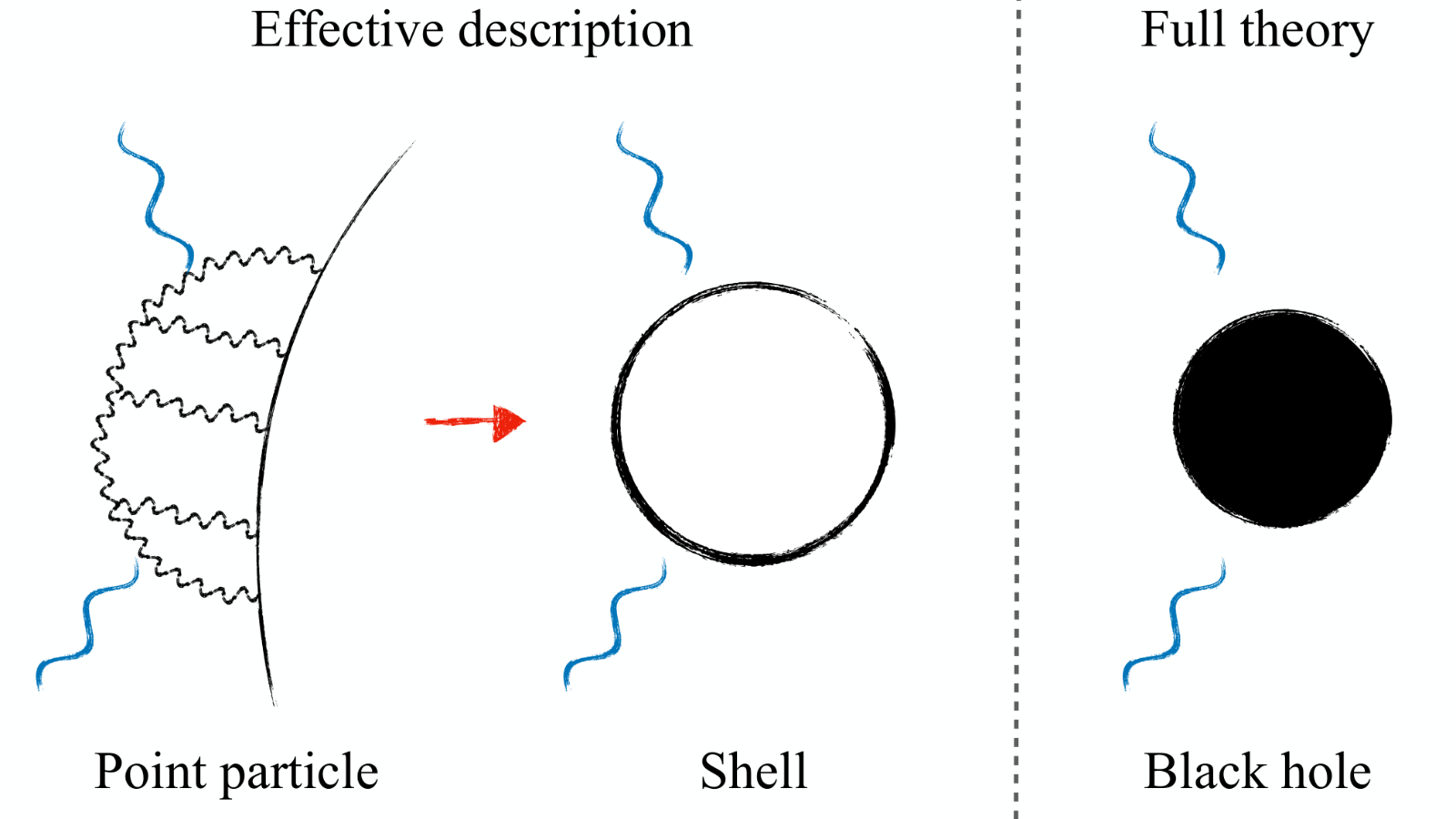
With Dimitrios Kosmopoulos and Davide Perrone, Solon built a new effective field theory that models the compact object as a thin spherical shell. Known solutions of black-hole physics can then be plugged in directly, skipping the hardest parts of the calculation. In 2026 Solon derived a single closed formula for a non-spinning black hole's dynamical tidal response, valid to all orders in G, and checked it with this framework to very high order.
Why it matters
Each new order in G sharpens the templates used to interpret gravitational-wave events, and the comparison between independent approaches (post-Minkowskian, slow-motion, self-force and numerical relativity) is itself a powerful check on Einstein's theory. The Institute hosts the UCLA side of GWSky, a six-year European Research Council Synergy Grant led jointly by Bern with partners at the Max Planck Institute for Gravitational Physics in Potsdam, SISSA in Trieste and the Niels Bohr Institute in Copenhagen. Its goal is gravitational-wave theory precise enough for the coming generation of detectors, and able to tell genuine new physics apart from astrophysical effects or modeling errors.
Key papers
- One-loop n-point gauge theory amplitudes, unitarity and collinear limitsZ. Bern, L. Dixon, D. C. Dunbar, D. A. Kosower · (1994). The unitarity method. arXiv:hep-ph/9403226
- Perturbative quantum gravity as a double copy of gauge theoryZ. Bern, J. J. M. Carrasco, H. Johansson · (2010). arXiv:1004.0476
- Scattering amplitudes and the conservative Hamiltonian for binary systems at third post-Minkowskian orderZ. Bern, C. Cheung, R. Roiban, C.-H. Shen, M. P. Solon, M. Zeng · (2019). arXiv:1901.04424
- Scattering amplitudes, the tail effect, and conservative binary dynamics at O(G4)Z. Bern, J. Parra-Martinez, R. Roiban, M. S. Ruf, C.-H. Shen, M. P. Solon, M. Zeng · (2021). arXiv:2112.10750
- Scattering amplitudes and conservative binary dynamics at O(G5) without self-force truncationZ. Bern, E. Herrmann, R. Roiban, M. S. Ruf, A. V. Smirnov, S. Smith, M. Zeng · (2025). arXiv:2512.23654
- Universal closed form for dynamical Love numbers of black holesM. P. Solon · (2026). arXiv:2606.19281
Watch
More questions we are asking
 Quantum gravity & holographyWhat is spacetime made of?
 SymmetryWhat is a symmetry, and what does it forbid?
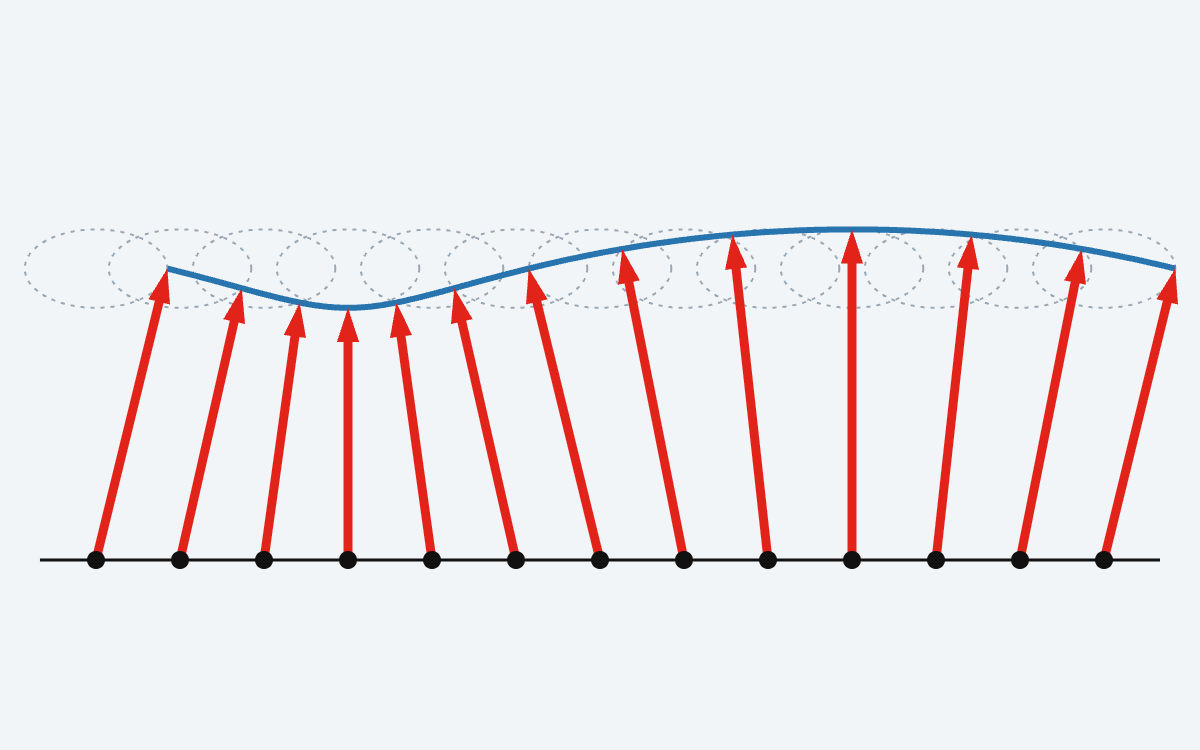 Quantum matterHow do spins, electrons and topology create new states of matter?
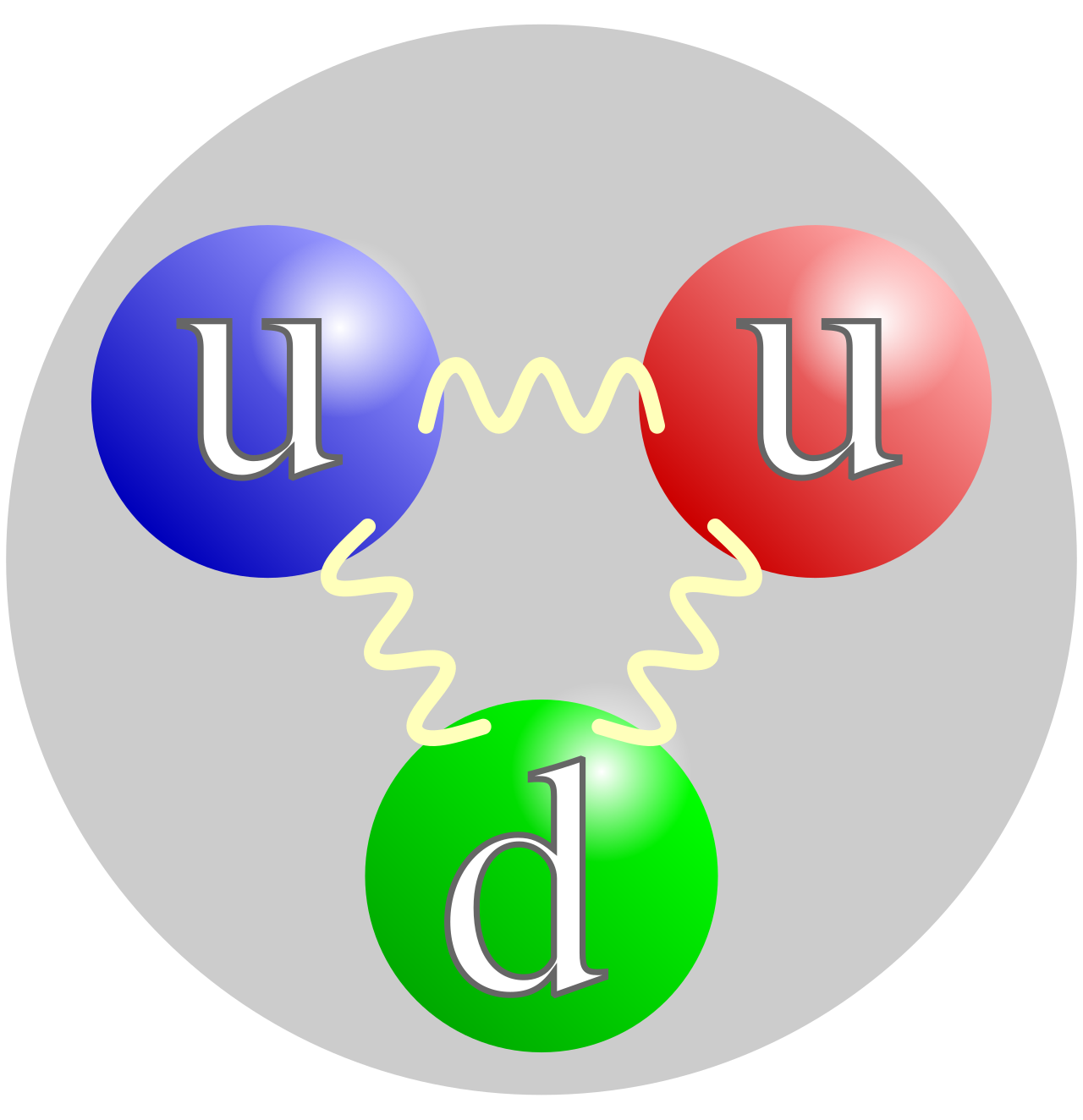 Inside the protonHow do quarks and gluons build the proton?
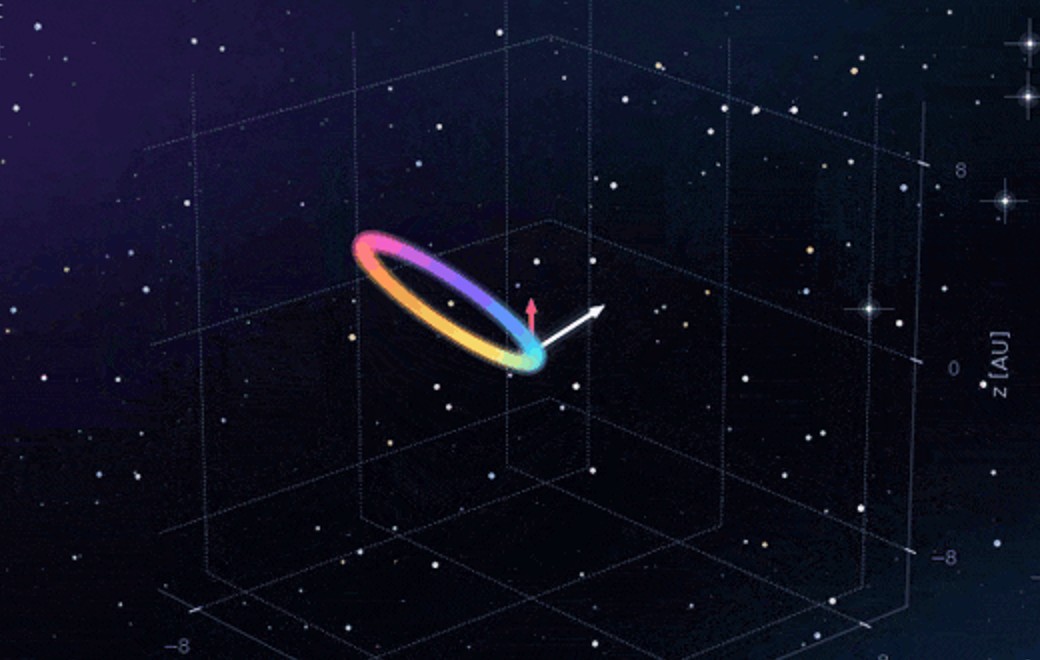 Planets, stars & black holesHow does gravity's many-body dance shape the cosmos?
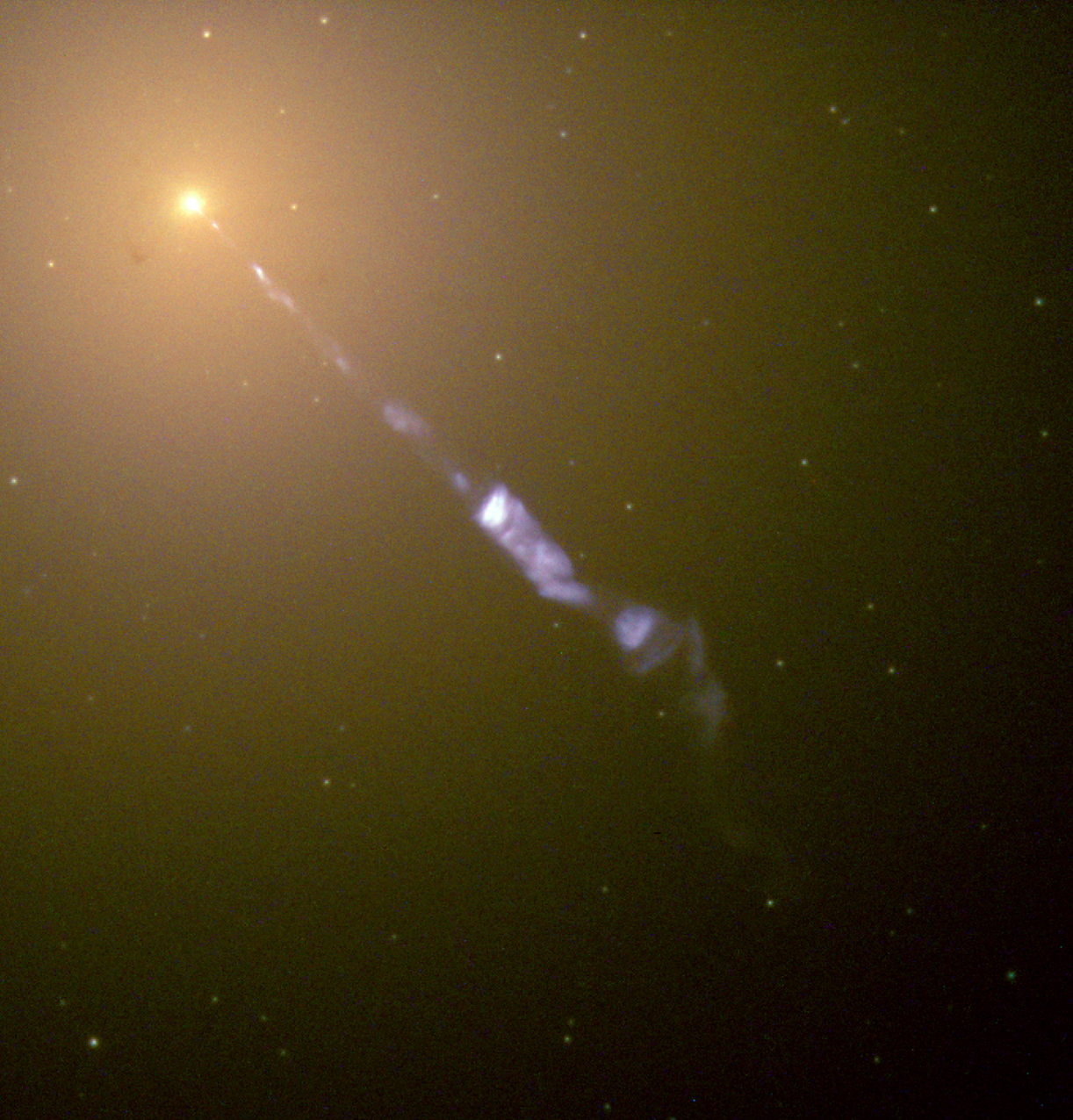 Extreme plasmasHow do cosmic plasmas make magnetic fields and cosmic rays?
 Living matterHow do living systems sense, learn and adapt?