

Our Research / Quantum matter
Yaroslav TserkovnyakRahul RoySudip ChakravartyRyan Thorngren
Every electron is a tiny magnet, and when trillions of them act together they can do things no single particle can: carry a current of pure magnetism with no electric charge, or turn an ordinary-looking insulator into a material whose surface is forced to conduct. Theorists at the Institute work out the rules behind these collective behaviors. Some of those rules come from topology, the mathematics of properties that survive smooth deformation, which makes certain quantum effects unusually robust.
A current made of spin, not charge
Ordinary electronics moves electric charge around, and moving charge through wires wastes energy as heat. But electrons also carry spin, a built-in magnetic moment, and "spintronics" asks whether spin itself can carry information. The catch is making a flow of spin without a flow of charge.
In 2001 Yaroslav Tserkovnyak, working with Arne Brataas and Gerrit Bauer, showed theoretically that a magnet can do this on its own. When the magnetization of a thin magnetic film wobbles, like a spinning top, it "pumps" spin into a neighboring non-magnetic metal. The spin that leaks out also acts back on the magnet, making its wobble die away faster, which explained trends in the extra damping that experimentalists had seen in very thin magnetic films. The effect became known as spin pumping, and the team developed it into a full theory of how magnetic layers talk to each other through spin currents, including a 2005 review in Reviews of Modern Physics written with Bertrand Halperin.
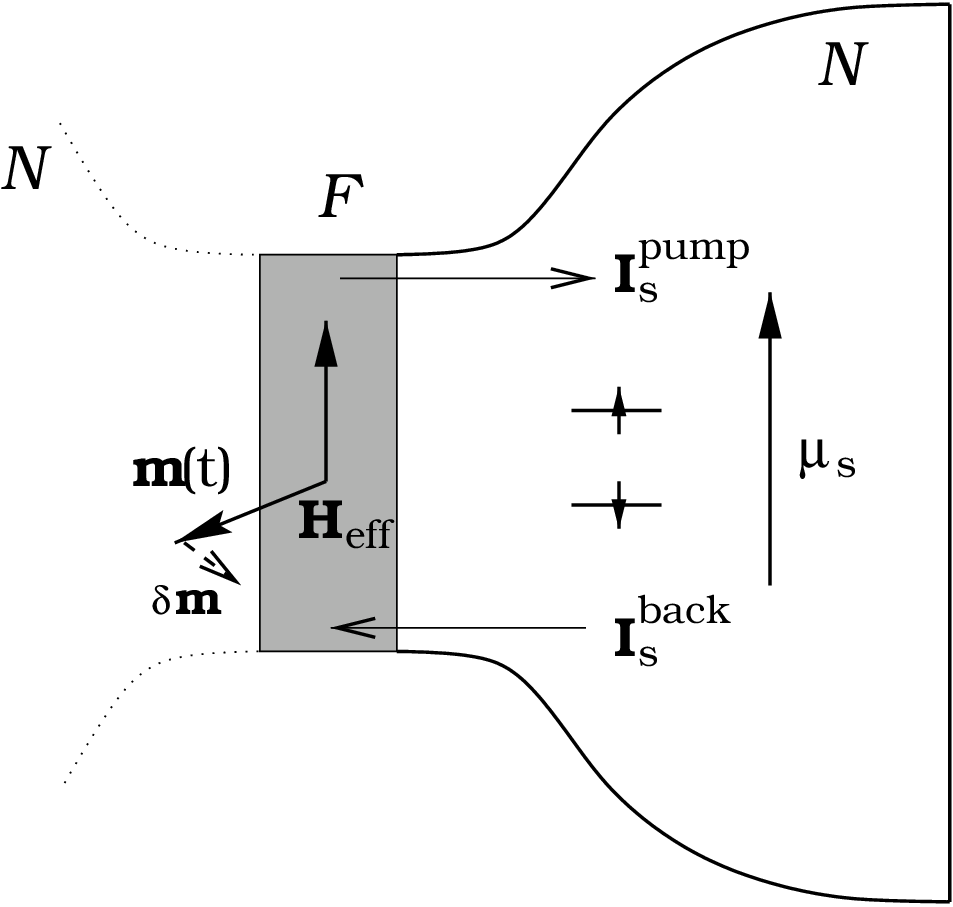
Spin currents can also travel through materials that do not conduct electricity at all. In magnetic insulators, spin can move as a spin wave (shown at the top of this page). In 2010 an experiment led by Eiji Saitoh's group sent an electrical signal through an insulating magnet this way. Building on earlier ideas of spin superfluidity, Tserkovnyak and So Takei showed how spin injected electrically could flow through certain magnetic insulators as a "spin superfluid", with very little loss, by analogy with frictionless flow in superfluid helium.
Insulators with conducting skins
A second idea is topology. In 1980 Klaus von Klitzing discovered that in a strong magnetic field, the Hall resistance of a thin layer of electrons comes in perfectly sharp steps, the quantum Hall effect. The sharpness comes from topology: the electrons' quantum states have a kind of twist, counted by a whole number, that cannot change without a drastic event, so impurities and imperfections do not spoil it.
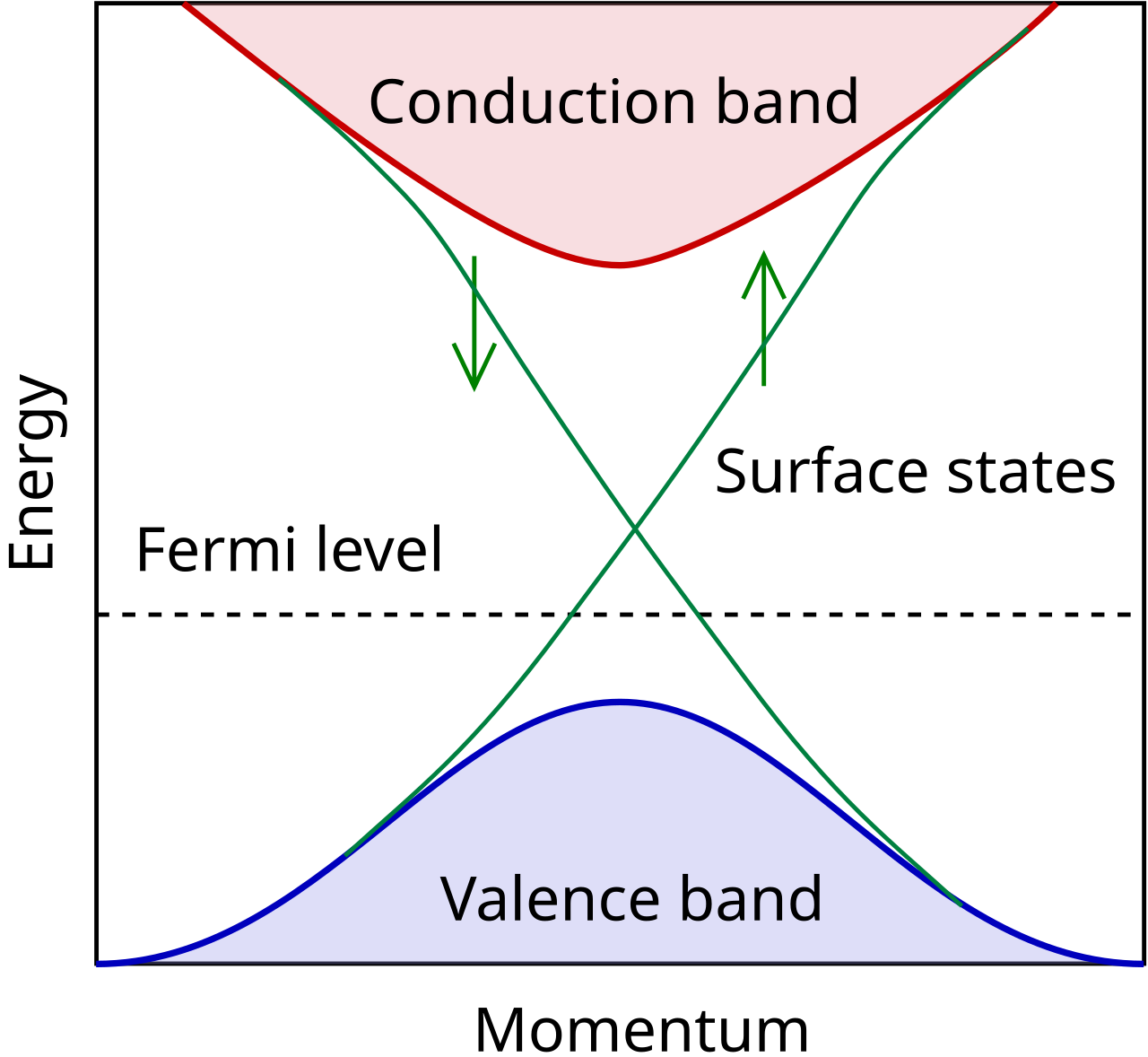
In 2005 theorists realized that a related twist could exist in materials that keep time-reversal symmetry, with no magnetic field at all. In 2006 Rahul Roy showed how this kind of topological label, called a Z2 invariant, extends to three-dimensional crystals; several groups reached closely related results independently in 2006 and 2007. The consequence is striking: a crystal with this twist is an insulator inside, yet its surface must conduct, because the twist cannot simply end at the edge. These materials are now called three-dimensional topological insulators.
Topology on a timer
Topology need not be frozen in place. If a material is driven by a rhythmic push, such as a laser or a pulsed field, its properties repeat in time; physicists call it a Floquet system. In 2016 Roy and Fenner Harper built a "periodic table" for such driven topological insulators, showing that driving enlarges the set of possible topological types compared with static materials. They also showed that interacting driven systems of bosons, fermions or spins can move charge and information around their edges in ways no static system can, a form of order that exists only because the system is being driven.
Strong correlations, and phases without gaps
Some of the most puzzling materials are those where electrons interact so strongly that they cannot be treated one at a time. The copper-oxide (cuprate) superconductors are the classic example. Their parent compounds are antiferromagnets, in which neighboring spins point in opposite directions. In 1988 Sudip Chakravarty, Bertrand Halperin and David Nelson showed that a quantum field theory of a single copper-oxide layer quantitatively accounts for neutron-scattering measurements of how far spin correlations extend in La2CuO4. Chakravarty has continued to work on the cuprates, including their mysterious "pseudogap" phase and "Planckian" dissipation, where electrons scatter as fast as quantum mechanics allows.
Ryan Thorngren works on the mathematical foundations of these questions. Topological phases were long thought to need an energy gap, a minimum cost to excite the system. With Ashvin Vishwanath and Ruben Verresen, Thorngren identified "intrinsically gapless" topological phases, which have no gapped counterpart and still show protected edge modes. With collaborators he has also argued that the Higgs phase of a gauge theory, a concept familiar from particle physics, can be understood as a symmetry-protected topological phase, which predicts edge modes in models where none were expected.
Why it matters
These ideas feed directly into technology. Spin currents point toward lower-power memory and logic, and robust topological states are candidates for building blocks of quantum devices. They also feed back into fundamental physics: the same mathematics of symmetry and topology connects the electrons in a crystal to the quantum field theories used for particles.
Key papers
- Low-temperature behavior of two-dimensional quantum antiferromagnetsS. Chakravarty, B. I. Halperin, D. R. Nelson · Phys. Rev. Lett. 60, 1057 (1988). doi
- Enhanced Gilbert damping in thin ferromagnetic filmsY. Tserkovnyak, A. Brataas, G. E. W. Bauer · (2001). arXiv:cond-mat/0110247
- Nonlocal magnetization dynamics in ferromagnetic heterostructuresY. Tserkovnyak, A. Brataas, G. E. W. Bauer, B. I. Halperin · (2004). arXiv:cond-mat/0409242
- Topological phases and the quantum spin Hall effect in three dimensionsR. Roy · (2006). arXiv:cond-mat/0607531
- Band geometry of fractional topological insulatorsR. Roy · (2012). arXiv:1208.2055
- Superfluid spin transport through easy-plane ferromagnetic insulatorsS. Takei, Y. Tserkovnyak · (2013). arXiv:1311.0288
- Periodic table for Floquet topological insulatorsR. Roy, F. Harper · (2016). arXiv:1603.06944
- Intrinsically gapless topological phasesR. Thorngren, A. Vishwanath, R. Verresen · (2020). arXiv:2008.06638
Watch
More questions we are asking
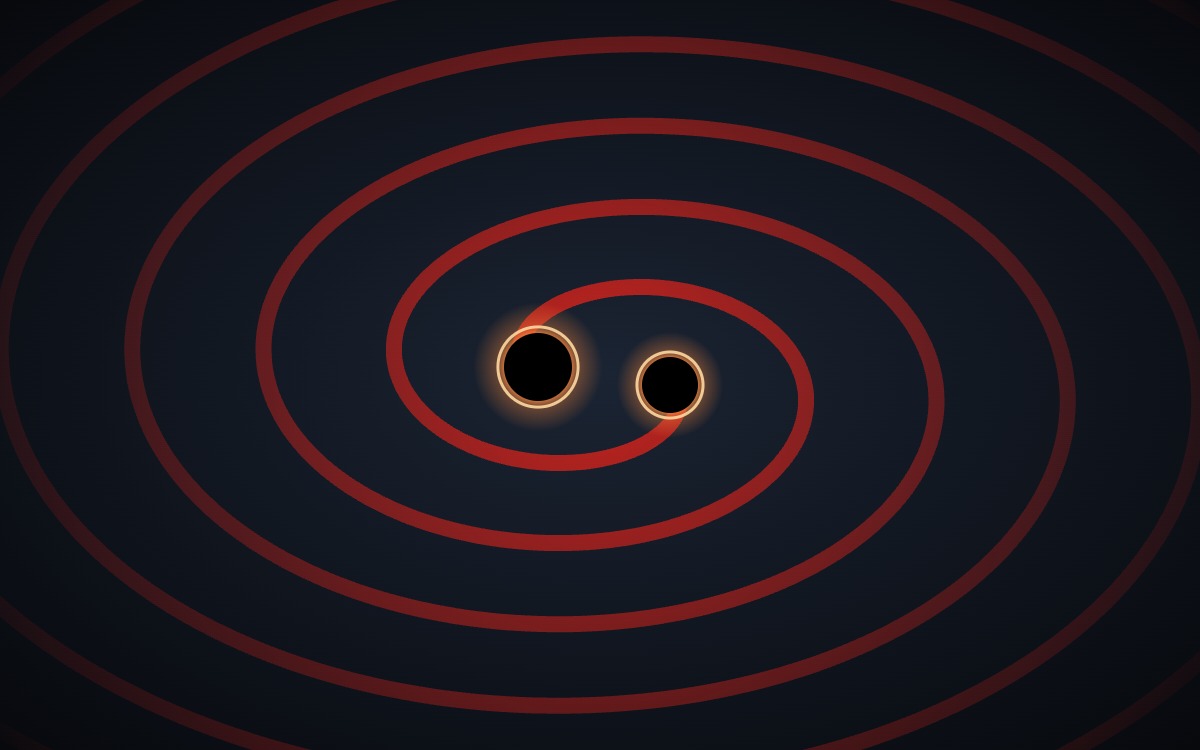 Gravity & amplitudesWhat can particle collisions teach us about colliding black holes?
 Quantum gravity & holographyWhat is spacetime made of?
 SymmetryWhat is a symmetry, and what does it forbid?
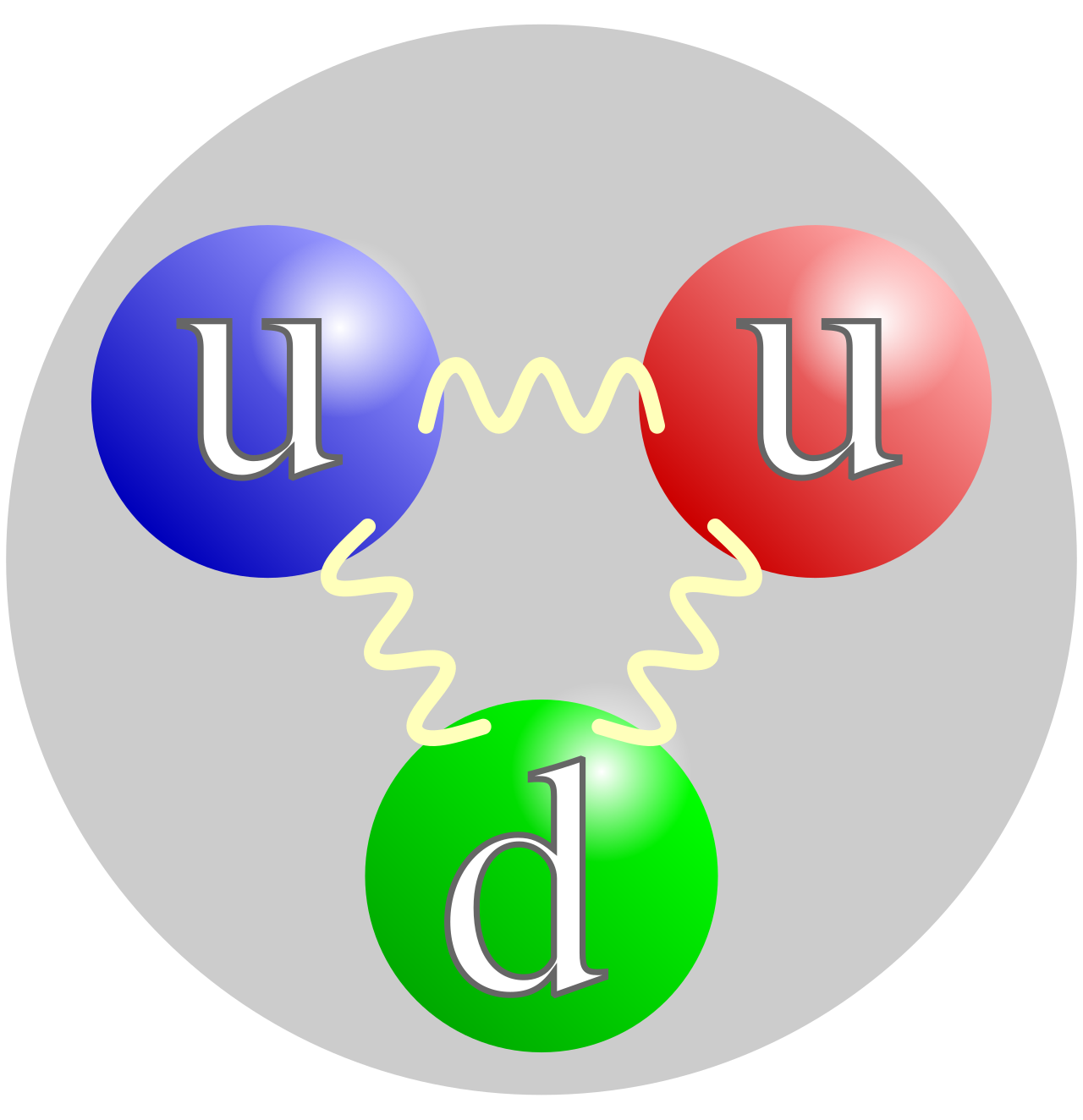 Inside the protonHow do quarks and gluons build the proton?
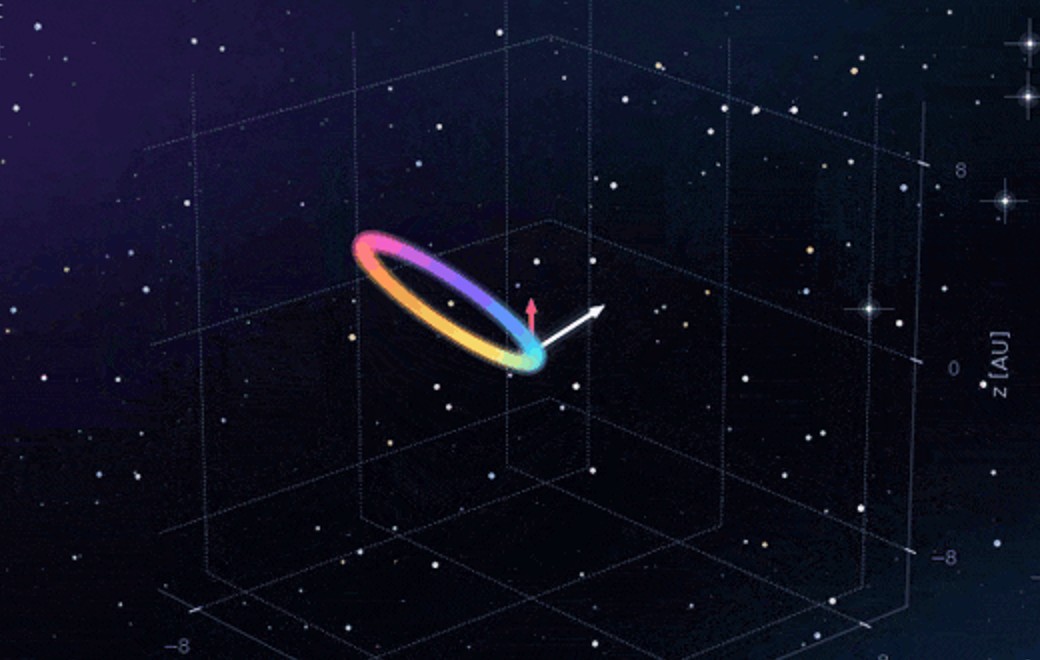 Planets, stars & black holesHow does gravity's many-body dance shape the cosmos?
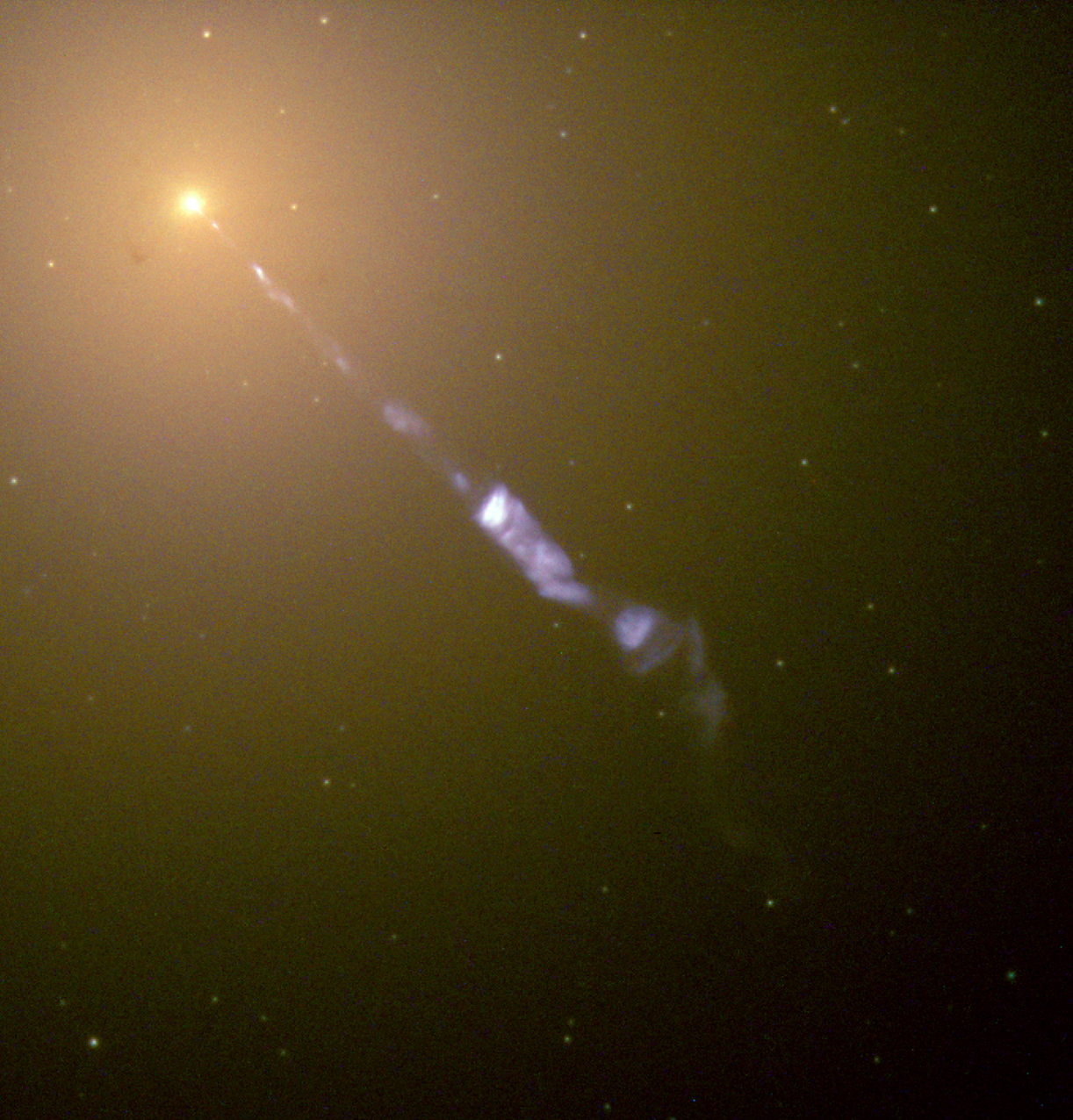 Extreme plasmasHow do cosmic plasmas make magnetic fields and cosmic rays?
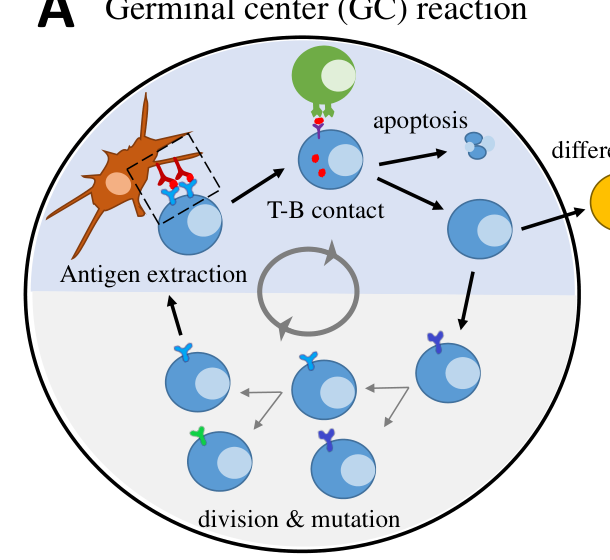 Living matterHow do living systems sense, learn and adapt?