

From the quantum structure of spacetime to the way immune cells learn, theorists at the Mani L. Bhaumik Institute work on a small number of deep questions. Many of our best ideas come from people in different fields sharing a blackboard: particle physicists borrowing from materials, black-hole physics borrowing from collider physics. Here are eight questions where UCLA theory is making its mark. Pick one to read the story.
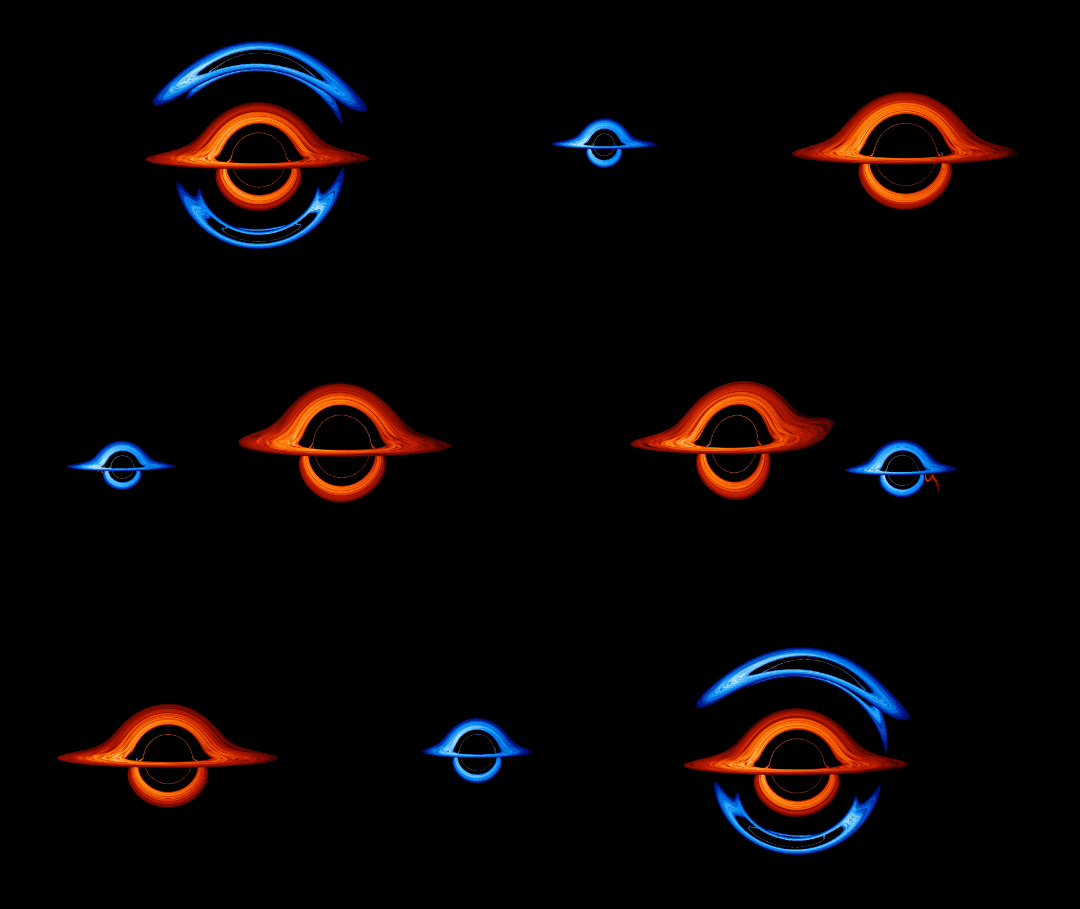 Gravity & amplitudesWhat can particle collisions teach us about colliding black holes?Zvi Bern, Mikhail SolonRead the story →
 Quantum gravity & holographyWhat is spacetime made of?Per Kraus, Michael GutperleRead the story →
 SymmetryWhat is a symmetry, and what does it forbid?Thomas Dumitrescu, Ryan Thorngren, Michael GutperleRead the story →Quantum matterHow do spins, electrons and topology create new states of matter?Yaroslav Tserkovnyak, Rahul Roy, Sudip Chakravarty, Ryan ThorngrenRead the story →
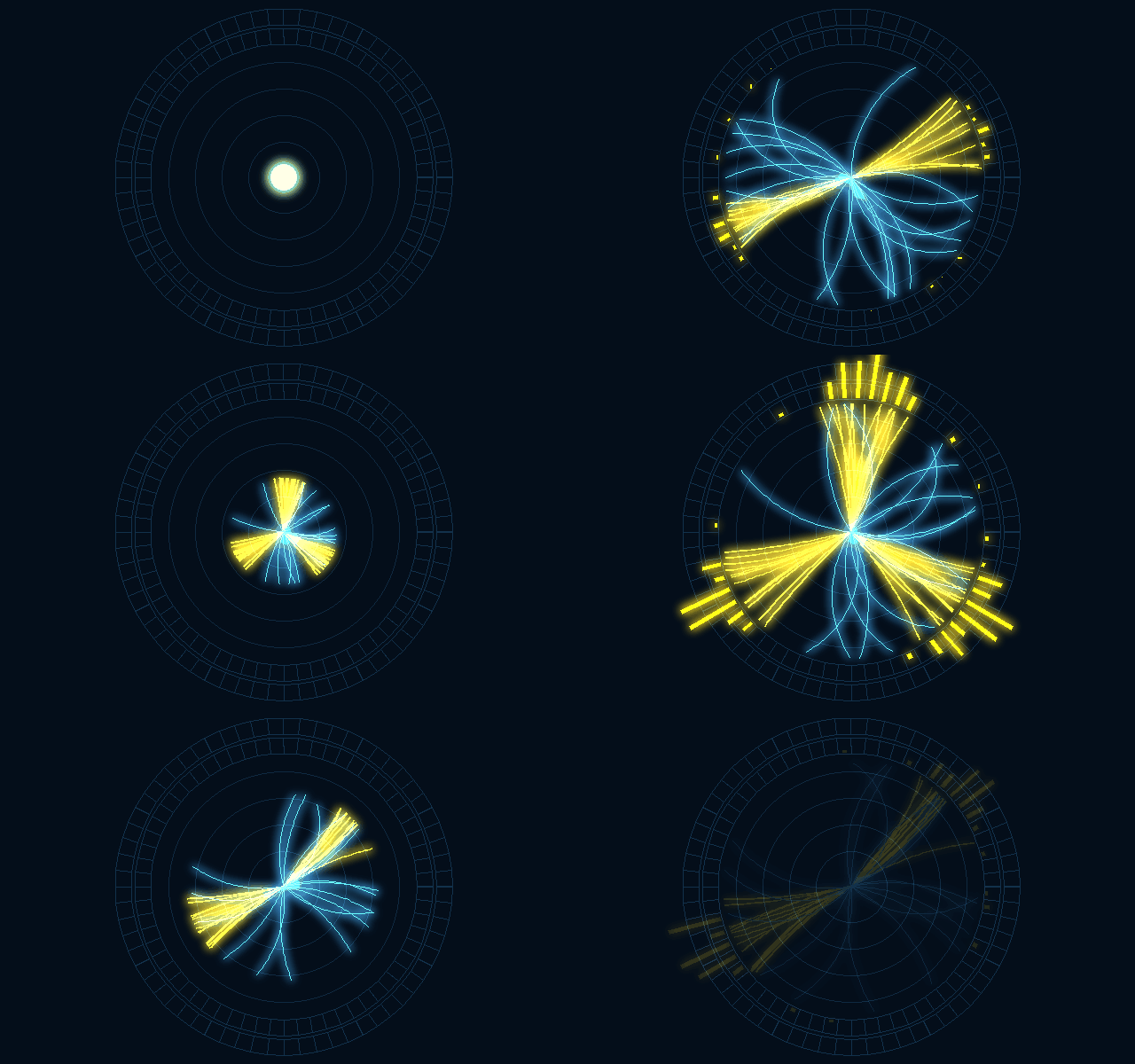 Inside the protonHow do quarks and gluons build the proton?Zhongbo KangRead the story →
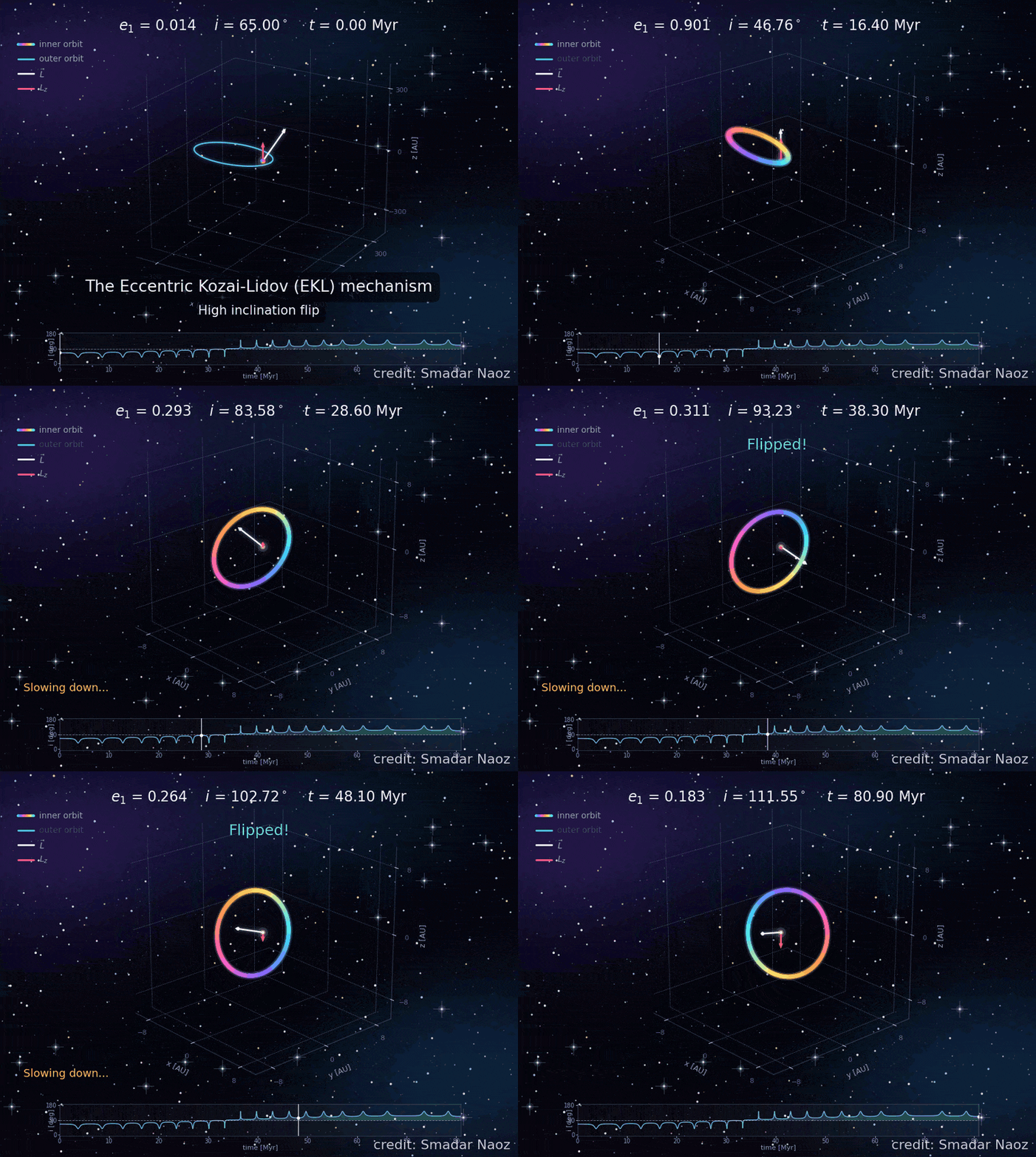 Planets, stars & black holesHow does gravity's many-body dance shape the cosmos?Smadar Naoz, Brad HansenRead the story →
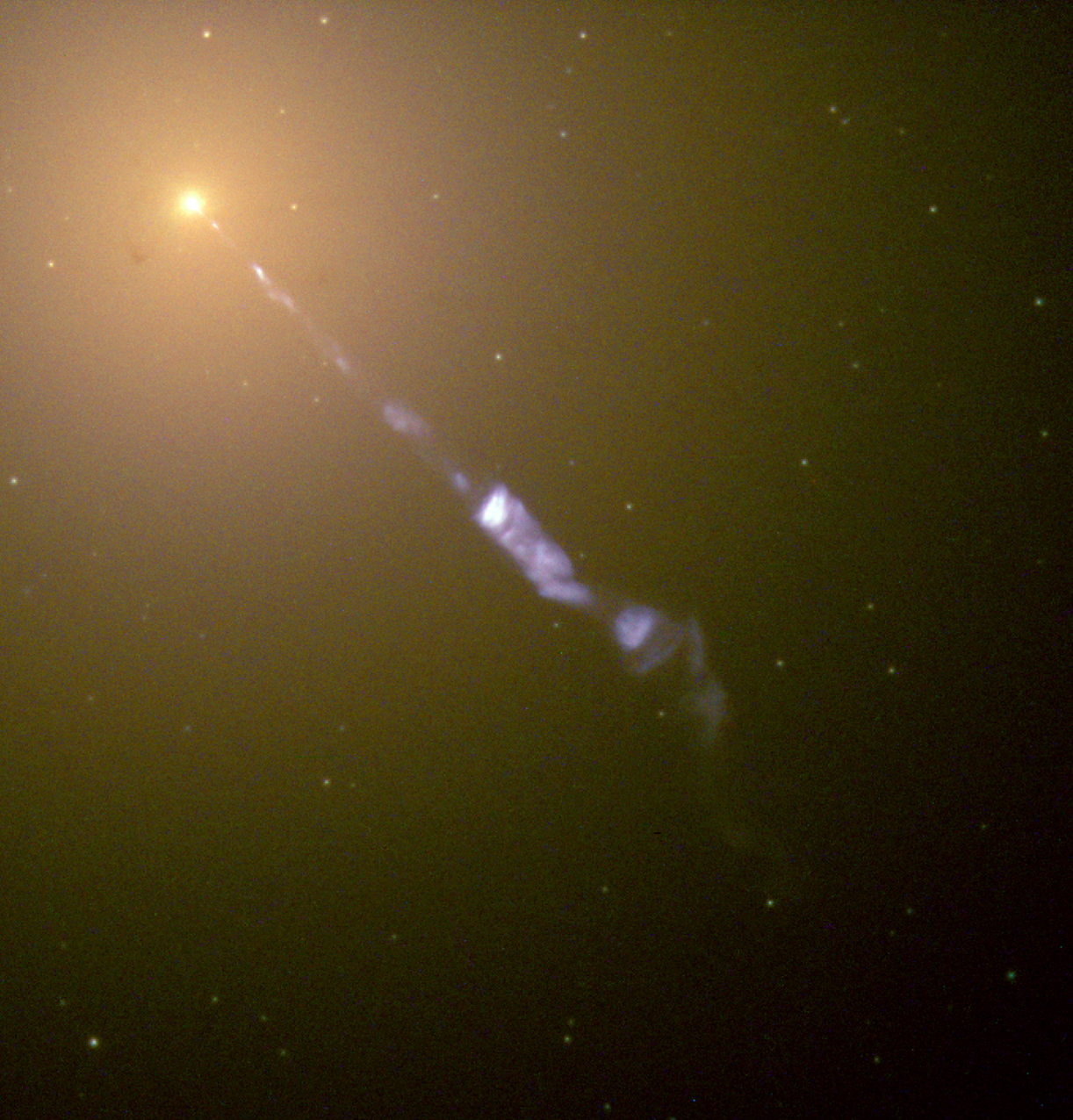 Extreme plasmasHow do cosmic plasmas make magnetic fields and cosmic rays?Paulo AlvesRead the story →
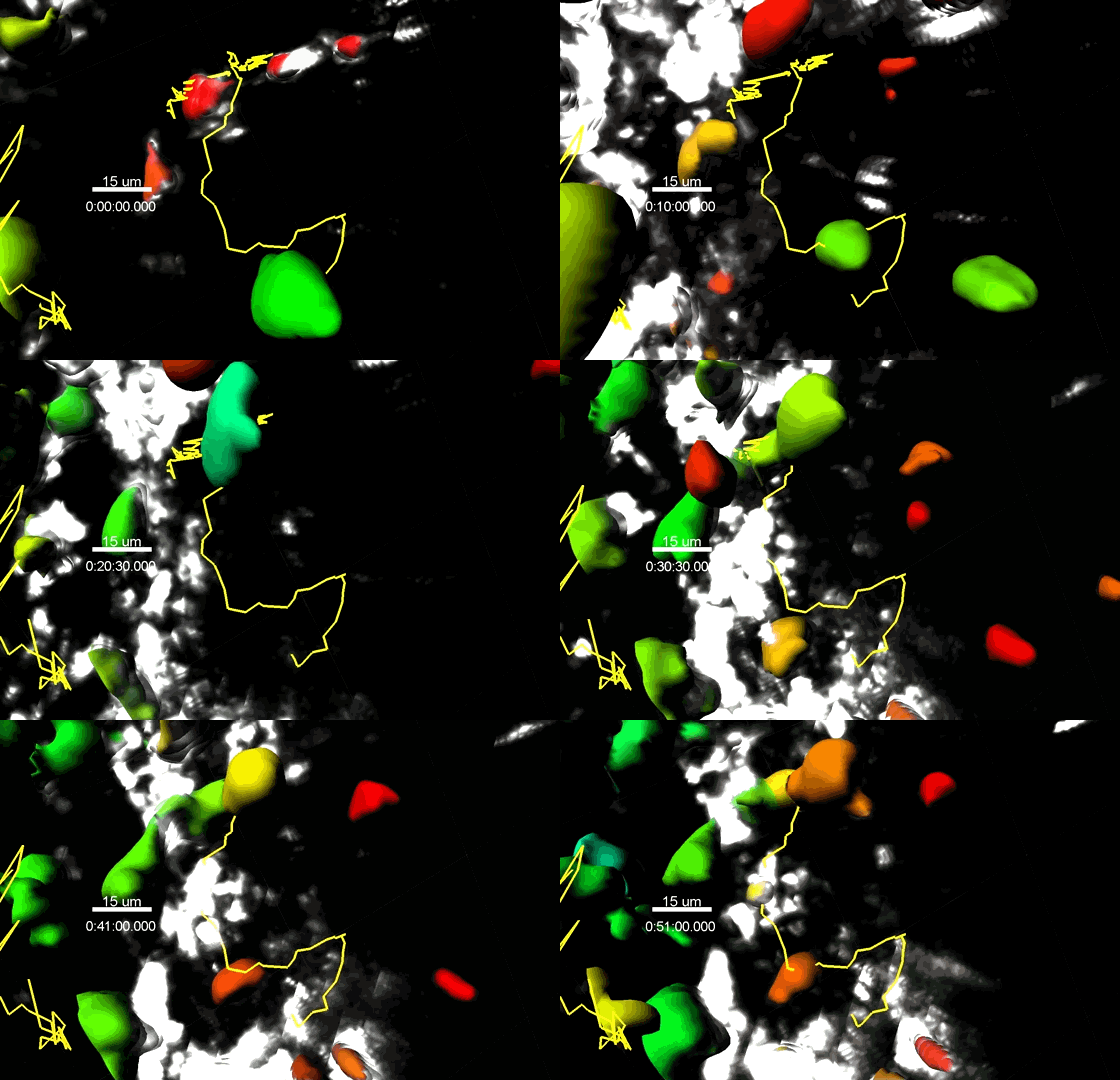 Living matterHow do living systems sense, learn and adapt?Shenshen WangRead the story →
Across the themes
Quantum simulation
Theorists across the Institute are learning to put quantum field theories on quantum computers and lattices: gauge theories simulated on quantum hardware (Kang), exactly chiral lattice fermions and chiral gauge theories (Thorngren), and entangled spin qubits driven by dissipation (Tserkovnyak).
AI for theoretical physics
Machine learning now appears throughout our work: AI-assisted analysis of QCD data (Kang), plasma equations discovered from simulations (Alves), and the dynamics of generative AI models (Wang). In 2026 the Institute co-organized Accelerating Math and Theoretical Physics with AI with IPAM and OpenAI.
Recognition
- 2026New Horizons in Physics Prize: Thomas Dumitrescu
- 2026ICBS Frontiers of Science Award: Zvi Bern and Mikhail Solon
- 2026APS Fellow: Zhongbo Kang
- 2025Humboldt Foundation Bessel Research Award: Zhongbo Kang
- 2024National Academy of Sciences: Zvi Bern
- 2024ERC Synergy Grant GWSky (co-PI): Zvi Bern
- 2024Niels Bohr Institute Medal of Honour: Zvi Bern
- 2024AAS Fellow: Smadar Naoz
- 2023Galileo Galilei Medal: Zvi Bern
- 2023DOE Early Career Award: Mikhail Solon
- 2022APS Fellows: Per Kraus, Smadar Naoz
- 2022Sloan Research Fellowship: Mikhail Solon
- 2022NSF CAREER Award: Shenshen Wang
- 2020AAS Helen B. Warner Prize: Smadar Naoz
- 2020Pomeranchuk Prize: Sergio Ferrara
- 2020NSF CAREER Award: Zhongbo Kang
- 2019Special Breakthrough Prize in Fundamental Physics: Sergio Ferrara
- 2019DOE Early Career Award: Thomas Dumitrescu
- 2018IBM Einstein Fellowship, Institute for Advanced Study: William Newman
- 2017Humboldt Research Award: Yaroslav Tserkovnyak
- 2016Ettore Majorana Medal: Sergio Ferrara
