

Our Research / Quantum materials
Yaroslav TserkovnyakSudip Chakravarty
Every electron is a tiny magnet, and when trillions of them act together they can do things no single particle can. In a magnet they can carry a current of pure magnetism with no electric charge. In the copper oxides they lock into a magnetic pattern that, once the material is chemically doped, gives way to superconductivity at unusually high temperatures. Theorists at the Institute work out the rules behind these collective behaviors, from devices that run on spin to materials whose electrons interact too strongly to be treated one at a time.
A current made of spin, not charge
Ordinary electronics moves electric charge around, and moving charge through wires wastes energy as heat. But electrons also carry spin, a built-in magnetic moment, and "spintronics" asks whether spin itself can carry information. The catch is making a flow of spin without a flow of charge.
In 2001 Yaroslav Tserkovnyak, working with Arne Brataas and Gerrit Bauer, showed theoretically that a magnet can do this on its own. When the magnetization of a thin magnetic film wobbles, like a spinning top, it "pumps" spin into a neighboring non-magnetic metal. The spin that leaks out also acts back on the magnet, making its wobble die away faster, which explained trends in the extra damping that experimentalists had seen in very thin magnetic films. The effect became known as spin pumping, and the team developed it into a full theory of how magnetic layers talk to each other through spin currents, including a 2005 review in Reviews of Modern Physics written with Bertrand Halperin.
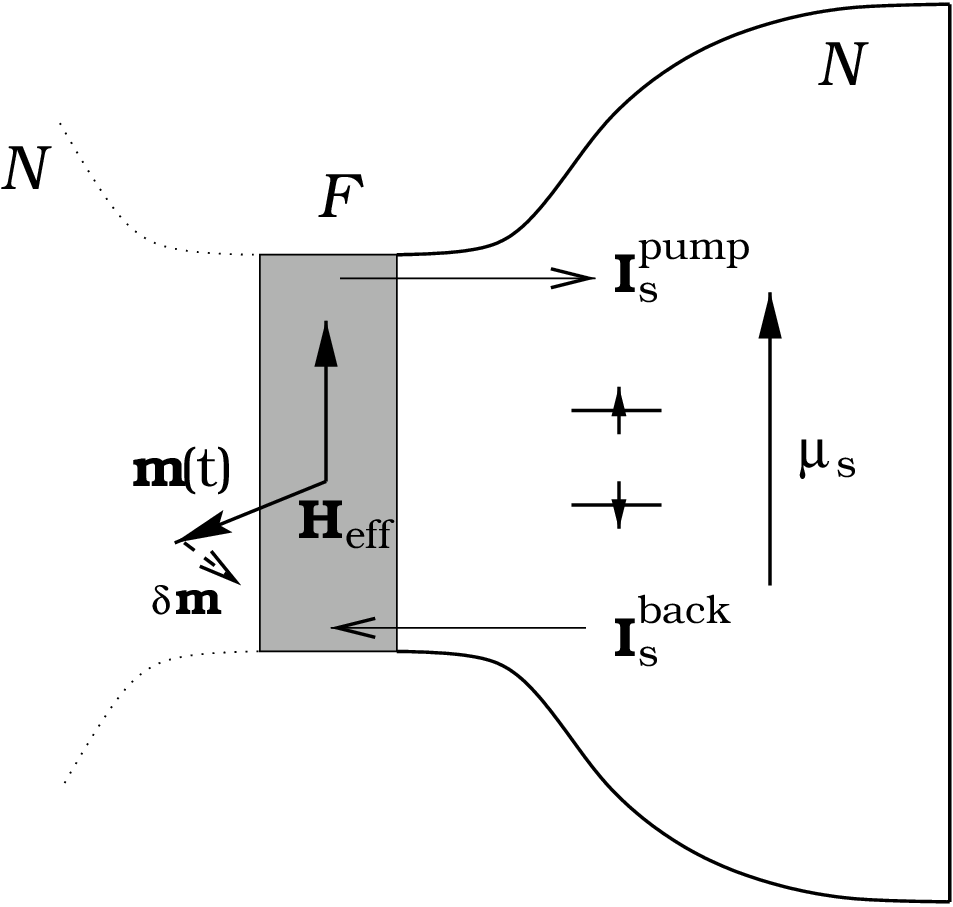
Spin currents can also travel through materials that do not conduct electricity at all. In magnetic insulators, spin can move as a spin wave (shown at the top of this page). In 2010 an experiment led by Eiji Saitoh's group sent an electrical signal through an insulating magnet this way. Building on earlier ideas of spin superfluidity, Tserkovnyak and So Takei showed how spin injected electrically could flow through certain magnetic insulators as a "spin superfluid", with very little loss, by analogy with frictionless flow in superfluid helium.
Strong correlations
Some of the most puzzling materials are those where electrons interact so strongly that they cannot be treated one at a time. The copper-oxide (cuprate) superconductors are the classic example. Their parent compounds are antiferromagnets, in which neighboring spins point in opposite directions. In 1988 Sudip Chakravarty, Bertrand Halperin and David Nelson showed that a quantum field theory of a single copper-oxide layer quantitatively accounts for neutron-scattering measurements of how far spin correlations extend in La2CuO4. Chakravarty has continued to work on the cuprates, including their mysterious "pseudogap" phase and "Planckian" dissipation, where electrons scatter as fast as quantum mechanics allows.
Why it matters
These ideas feed directly into technology. Spin currents point toward lower-power memory and logic, and magnets are emerging as tools for quantum technologies. Explaining how the strongly interacting electrons of the cuprates become superconductors remains one of the great open problems of physics. How topology makes some quantum states unusually robust is told in our Topological phases story.
Key papers
- Low-temperature behavior of two-dimensional quantum antiferromagnetsS. Chakravarty, B. I. Halperin, D. R. Nelson · Phys. Rev. Lett. 60, 1057 (1988). doi
- Enhanced Gilbert damping in thin ferromagnetic filmsY. Tserkovnyak, A. Brataas, G. E. W. Bauer · (2001). arXiv:cond-mat/0110247
- Nonlocal magnetization dynamics in ferromagnetic heterostructuresY. Tserkovnyak, A. Brataas, G. E. W. Bauer, B. I. Halperin · (2004). arXiv:cond-mat/0409242
- Superfluid spin transport through easy-plane ferromagnetic insulatorsS. Takei, Y. Tserkovnyak · (2013). arXiv:1311.0288
Watch
More questions we are asking
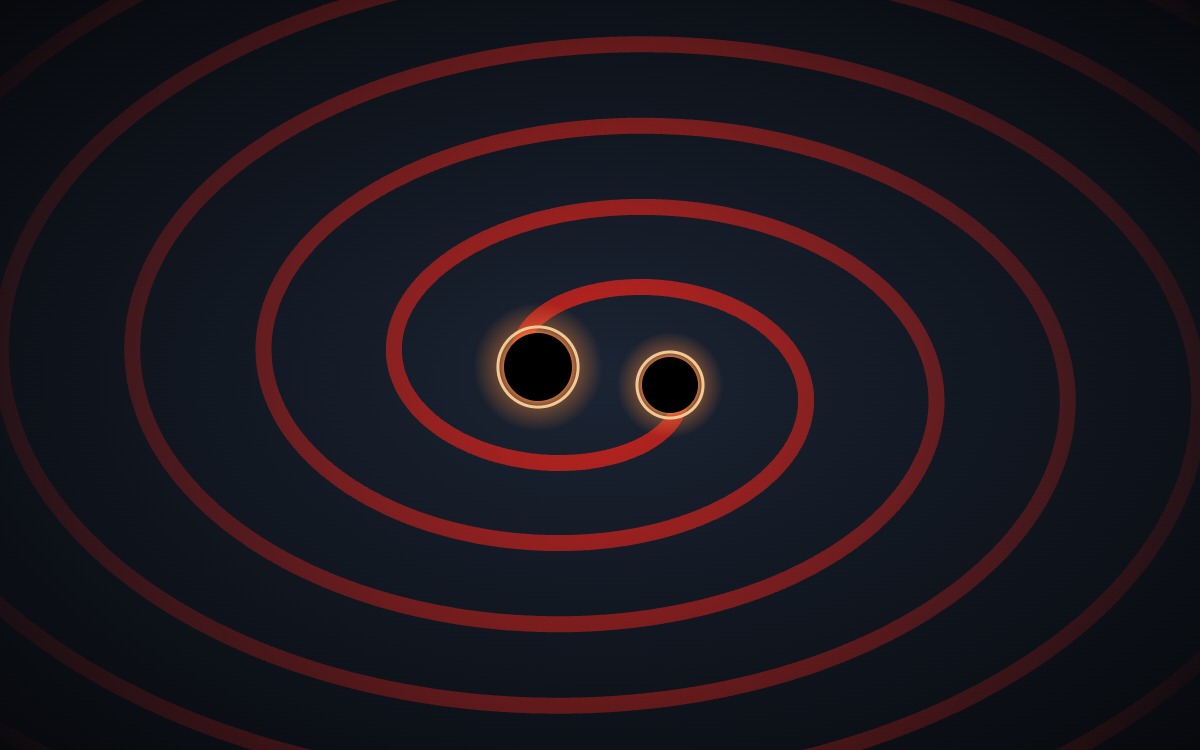 Gravity & amplitudesWhat can particle collisions teach us about colliding black holes?
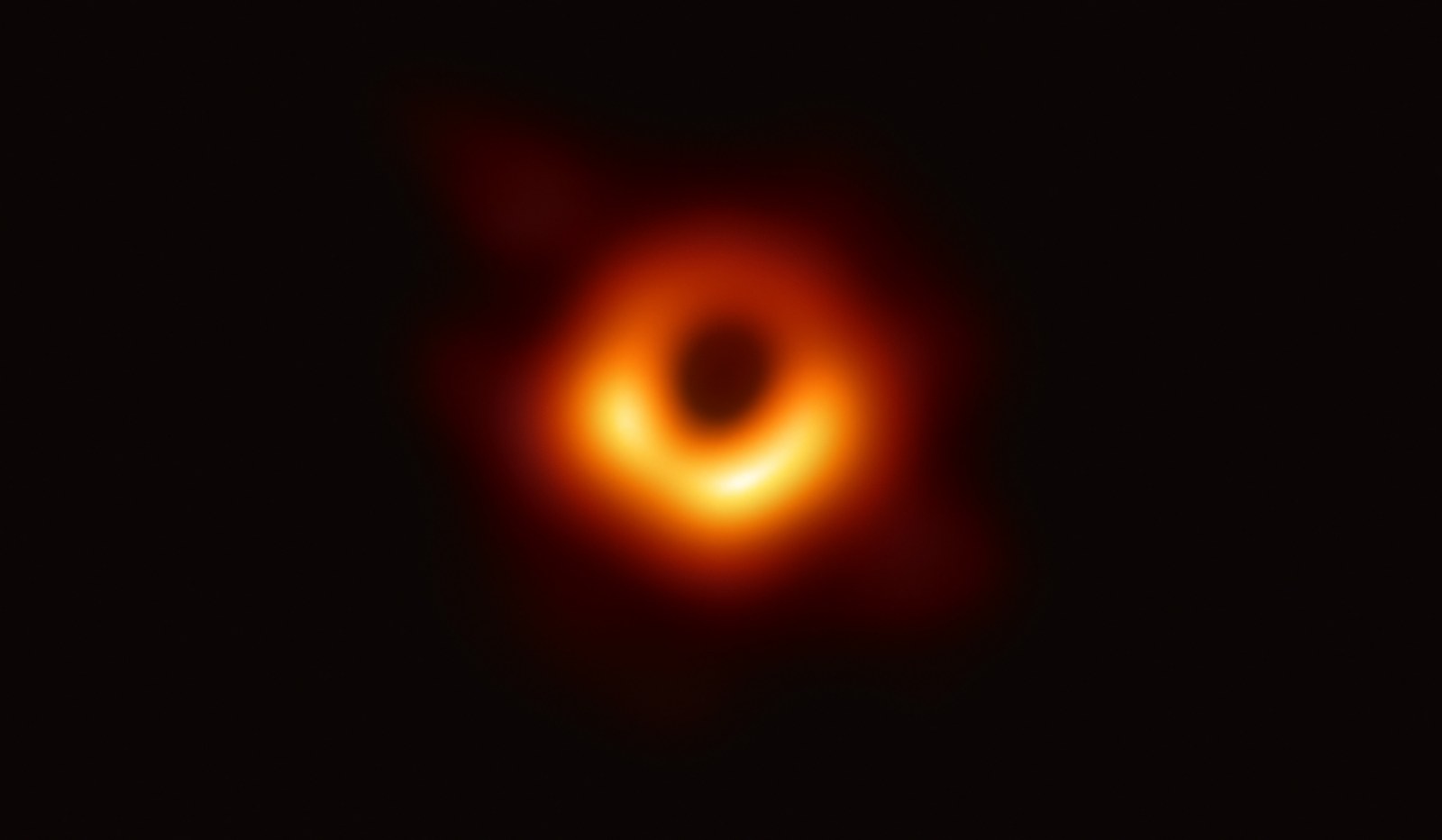 Quantum gravity & holographyWhat is spacetime made of?
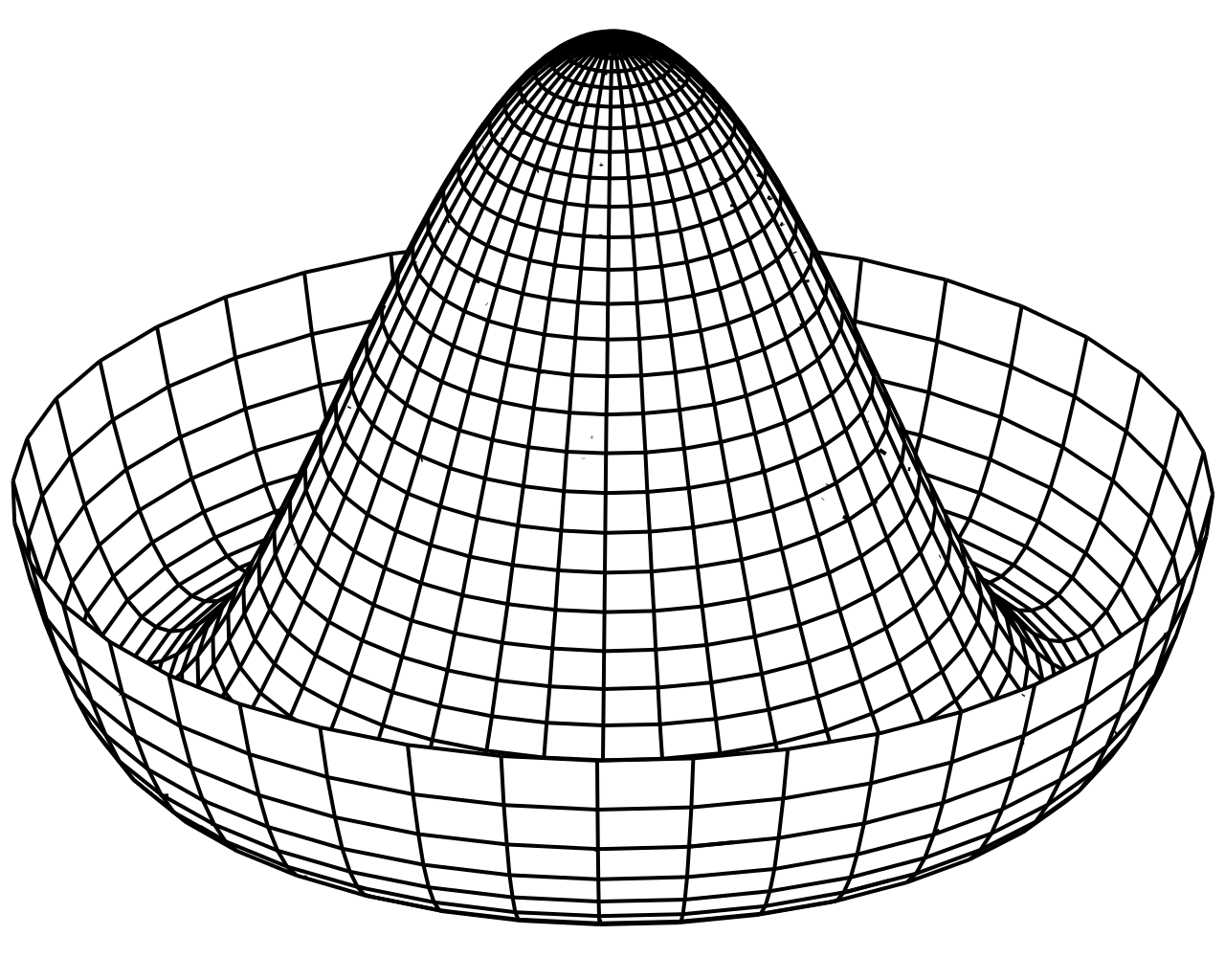 SymmetryWhat is a symmetry, and what does it forbid?Topological phasesWhy must some insulators conduct at their edges?
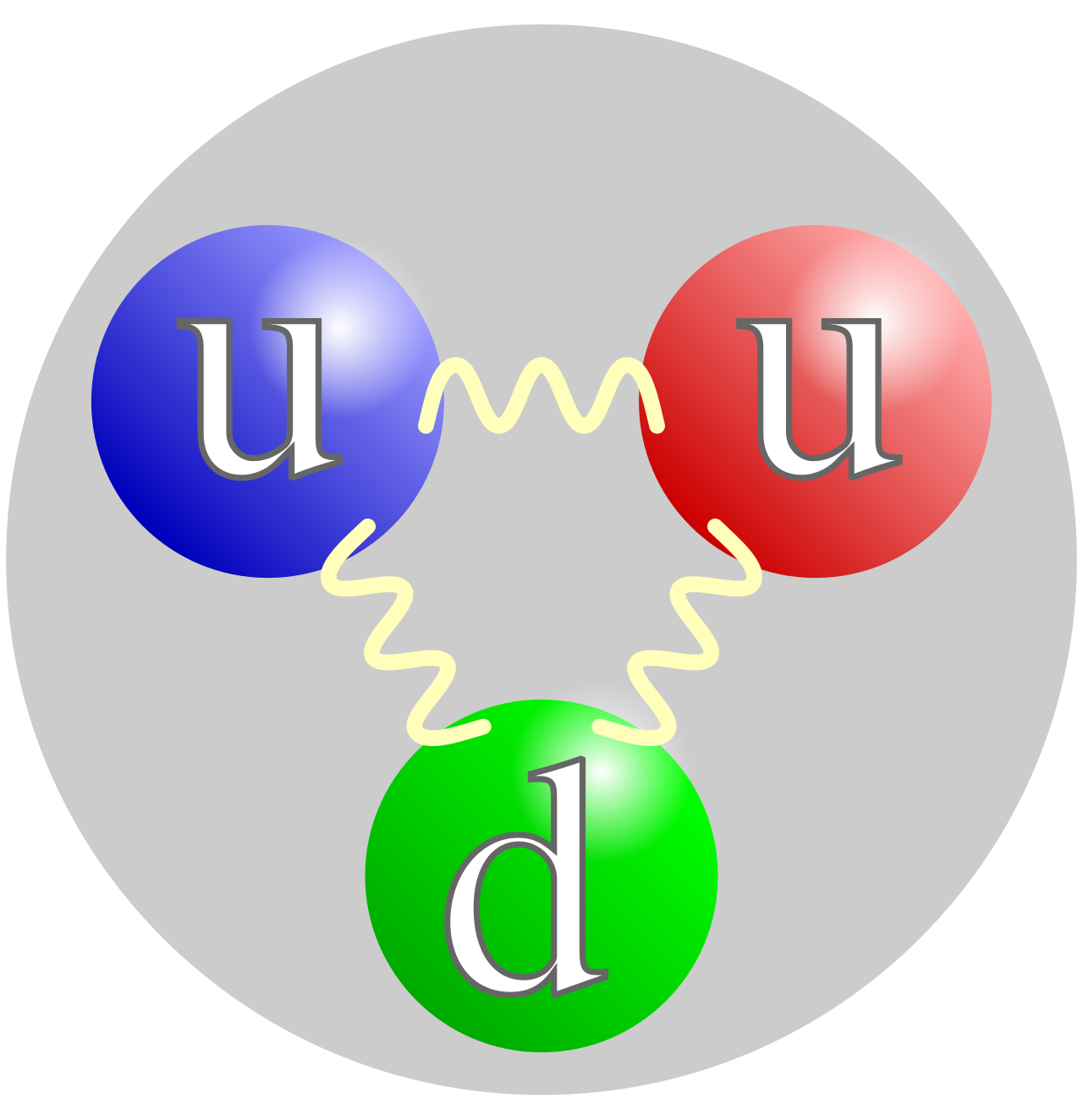 Inside the protonHow do quarks and gluons build the proton?
 Planets, stars & black holesHow does gravity's many-body dance shape the cosmos?
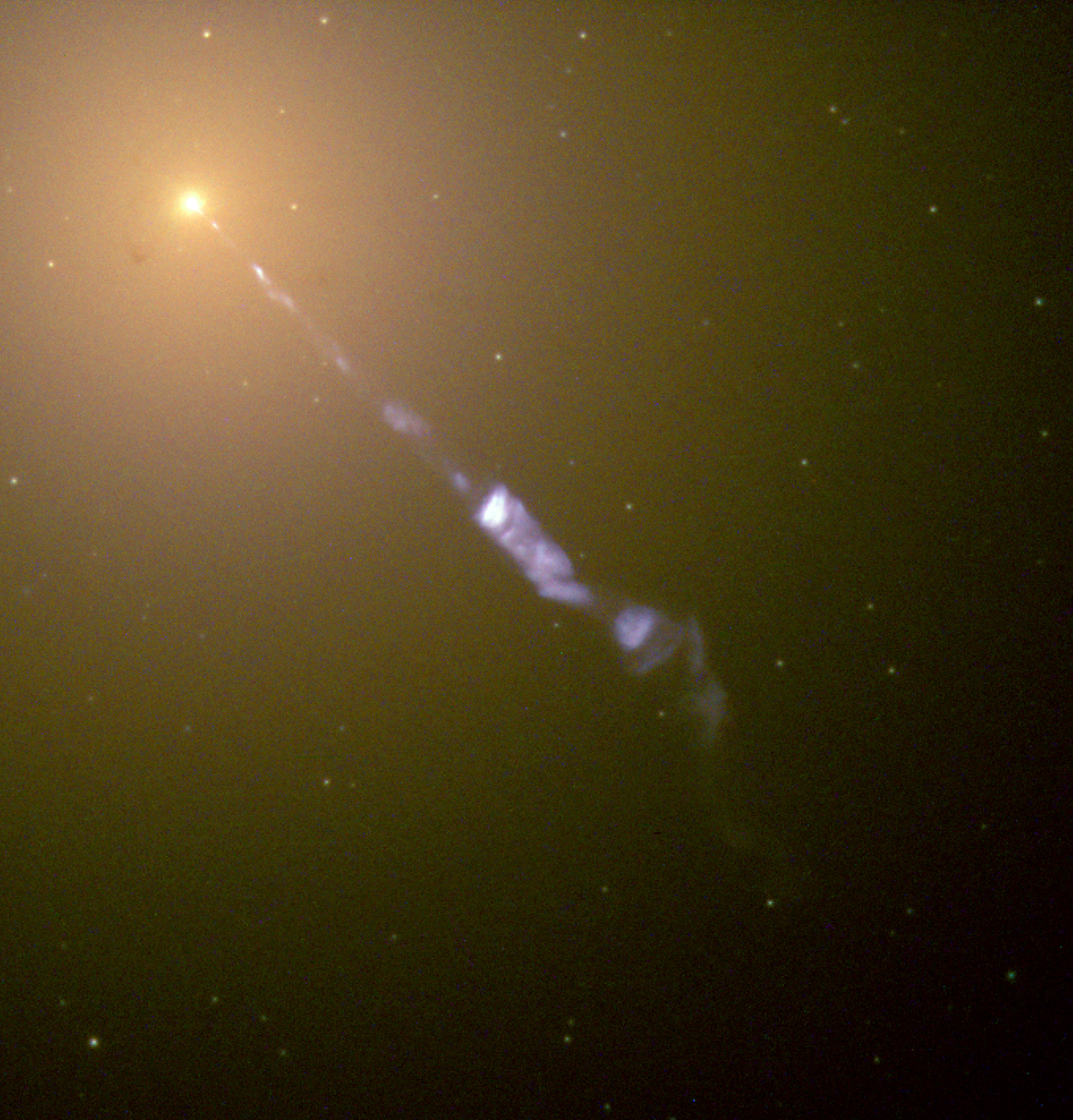 Extreme plasmasHow do cosmic plasmas make magnetic fields and cosmic rays?
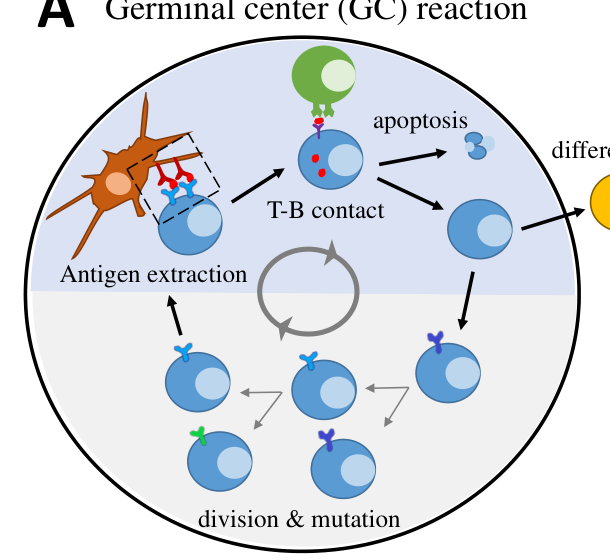 Living matterHow do living systems sense, learn and adapt?
