

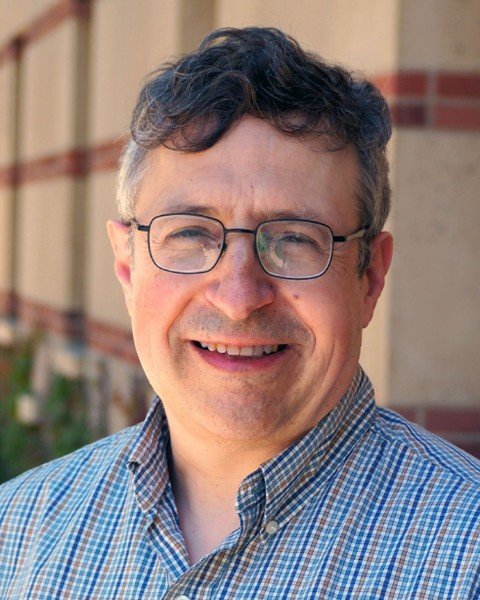
Founding Director
Zvi Bern
Professor Zvi Bern, a UCLA faculty member since 1992, is internationally renowned for his development of innovative approaches to the calculation of fundamental quantities relevant to the interpretation of scattering processes at the subnuclear level. He has also received widespread attention for recent advances in understanding the ultra-high energy properties of supergravity theories. His work is characterized by inspired utilization of the most advanced theoretical methods to carry out complex computations of physical importance. He has developed and applied new ideas for computing and understanding scattering amplitudes to physics at the Large Hadron Collider, to maximally supersymmetric gauge and gravity theories and most recently to gravitational wave physics.
Honors
- 2026ICBS Frontiers of Science AwardWith Mikhail Solon and collaborators, for “Black Hole Binary Dynamics from the Double Copy and Effective Field Theory.”
- 2024Niels Bohr Institute Medal of HonourNiels Bohr Institute, University of Copenhagen.
- 2024U.S. National Academy of SciencesElected member.
- 2023Galileo Galilei MedalINFN and the Galileo Galilei Institute for Theoretical Physics, with Lance Dixon and David Kosower.
- 2014J.J. Sakurai PrizeAmerican Physical Society’s highest honor for theoretical particle physics, with Lance Dixon (SLAC) and David Kosower (Saclay).
His research, in his words
TEDxCaltech: “Feynman Diagrams: Past, Present, Future.” An accessible overview of how new ways of computing scattering amplitudes have reshaped particle physics and gravity.
His work was also featured as the cover story of the May 2012 issue of Scientific American.
Director’s message
The formation of the Mani L. Bhaumik Institute for Theoretical Physics is a landmark event at the Department of Physics and Astronomy at UCLA. We are deeply indebted to Dr. Bhaumik for his generous support that made this possible.
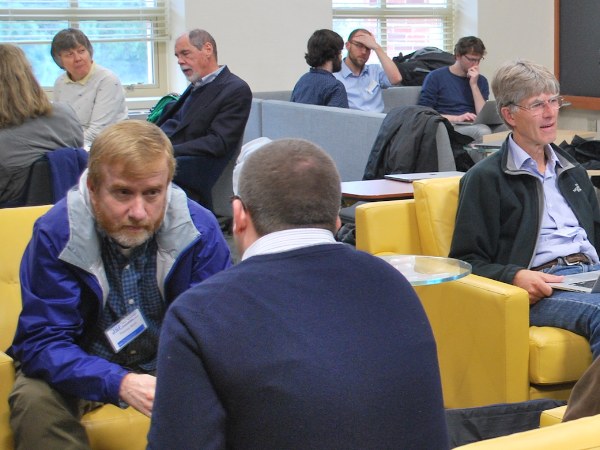
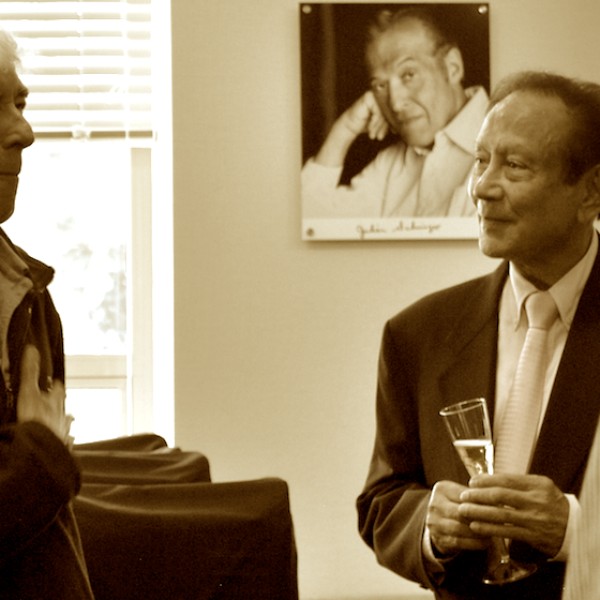
Institutes for Theoretical Physics play a crucial role, even in the modern era of instantaneous global communication. Nothing is better than intense face-to-face discussions for spreading and exchanging new cutting-edge ideas. It is the way new advances are made.
In keeping with this ideal, the Institute will run a robust visitor program, and will host workshops, conferences and public lectures on cutting-edge topics. In addition, we will host a Bhaumik Lecture series, constructing a library of lectures on a variety of topics from distinguished leaders. We can look forward to an exciting visitor program, bringing cutting-edge research to UCLA from around the world.
The Institute already starts from a solid foundation of exciting programs in the Department of Physics and Astronomy. A primary goal is to maintain and expand this excellence, starting in theoretical elementary particle physics and issues related to the unification of forces and matter. Concurrently, we also plan to support theorists, as best as possible, in all areas of physics, especially at the junior faculty level. It will also help provide advanced training for postdocs and graduate students in a multi-disciplinary environment. I expect the Institute to help us recruit the most talented junior faculty to join the UCLA family. The Institute will be an exciting place for our students and postdocs!
Our future has never been brighter! As founding director, I look forward to working with colleagues from around the Department to build a leading Institute for Theoretical Physics.
Membership
Membership in the Bhaumik Institute is open to any person in the theoretical physics community at UCLA. If you wish to become a member please contact me.
