

Our Research / Symmetry
Thomas DumitrescuRyan ThorngrenMichael Gutperle
A symmetry is a change you can make to a system that leaves its laws untouched, and every symmetry comes with a list of things that cannot happen. Over the past decade physicists have learned that this idea is far bigger than the textbook version: symmetries can act on lines and surfaces instead of points, can fuse into larger structures, and can even fail to be undoable. Researchers at the Institute help lead this shift, and they use the new "forbidden lists" to make firm statements about systems too strongly interacting to calculate directly.
Rules you can trust when calculation fails
Rotate a perfect sphere and nothing changes; that is a symmetry. Its power lies in what it rules out. Because the laws of physics are the same today and tomorrow, energy is conserved, and a ball cannot start rolling uphill on its own. In quantum physics, symmetries give "selection rules": certain transitions simply never happen.
This matters most where ordinary calculation breaks down. The quarks inside a proton, or electrons in a strongly correlated material, interact so strongly that pen-and-paper methods fail. Symmetry offers a way around: if you know what a theory's symmetries forbid, you can rule out whole classes of behavior without solving it.

The sharpest tool is an anomaly, a subtle quantum mismatch attached to a symmetry. Anomalies cannot change as a system is cooled or viewed at coarser resolution, so whatever the system does at low energy must reproduce the same anomaly. Often this forbids the most boring outcome: a featureless state with nothing interesting happening.
Symmetries that act on lines, surfaces and each other
In 2014 Davide Gaiotto, Anton Kapustin, Nathan Seiberg and Brian Willett showed that symmetries need not act only on particles; they can act on extended objects such as lines and surfaces (so-called higher-form symmetries). Thomas Dumitrescu, with Clay Córdova and Kenneth Intriligator, then showed that in ordinary four-dimensional gauge theories these symmetries can be welded into a single structure, a "2-group" symmetry (an idea explored earlier by Kapustin and Thorngren, among others), and worked out its consequences. The 2-group comes with its own rules for how a theory can behave as it is cooled.
Dumitrescu and collaborators have since shown that the charges carried by line-like objects, such as the paths of heavy probe particles or magnetic monopoles, can encode anomalies too, giving a new handle on gauge theories like the theory of the strong nuclear force. In 2026 Dumitrescu shared the New Horizons in Physics Prize with Córdova, Shu-Heng Shao and Yifan Wang for generalizing the notion of symmetry in quantum physics.
Symmetries you cannot undo
Every textbook symmetry can be reversed: rotate one way, rotate back. Ryan Thorngren and Yifan Wang studied symmetries in one-dimensional quantum systems that have no inverse. They are carried by "topological defect lines" that can be moved freely without changing anything measurable, and their algebra is not a group but a richer structure called a fusion category. Thorngren and Wang worked out the anomalies such symmetries carry and which phases of matter they allow, including new topological phases.
Michael Gutperle brings these ideas to holography, the correspondence between certain quantum theories and theories of gravity. With students and collaborators he has constructed non-invertible symmetries in "symmetric orbifold" theories, a family central to the best-understood examples of that correspondence, and determined which of them survive when the number of copies becomes large or the theory is deformed.
Phases that symmetry protects
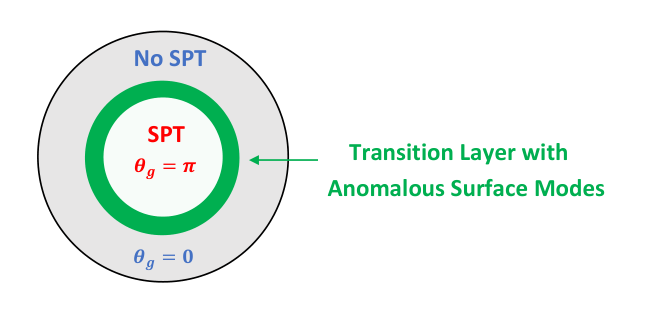
Symmetry also sorts phases of matter. In 2014 Thorngren, with Kapustin, Alex Turzillo and Zitao Wang, tested a proposal that cobordism, a tool from topology, classifies interacting "symmetry-protected topological phases" of fermions: materials whose interiors look ordinary but whose surfaces cannot be made boring without breaking a symmetry. The classification matched all known cases in up to three dimensions and predicted genuinely interacting phases in higher dimensions.
These ideas feed back into particle physics. Dumitrescu and Po-Shen Hsin argued that in some QCD-like theories the "Higgs" and "confining" regimes, long thought to blend smoothly into each other, are distinct phases told apart by exactly this kind of hidden topology, with possible consequences for the dense quark matter that may sit inside neutron stars.
What a symmetry can predict
Dumitrescu and Thorngren have also teamed up with Pierluigi Niro on quantum electrodynamics in two space dimensions, a model for exotic magnets. They argue that one candidate outcome is symmetry breaking driven by magnetic monopoles, and map out the resulting phase diagram using anomaly matching. Thorngren, with John Preskill and Lukasz Fidkowski, used symmetry to build lattice versions of "chiral" gauge theories, of the left-right asymmetric type found in the Standard Model, which have long been notoriously hard to put on a lattice.
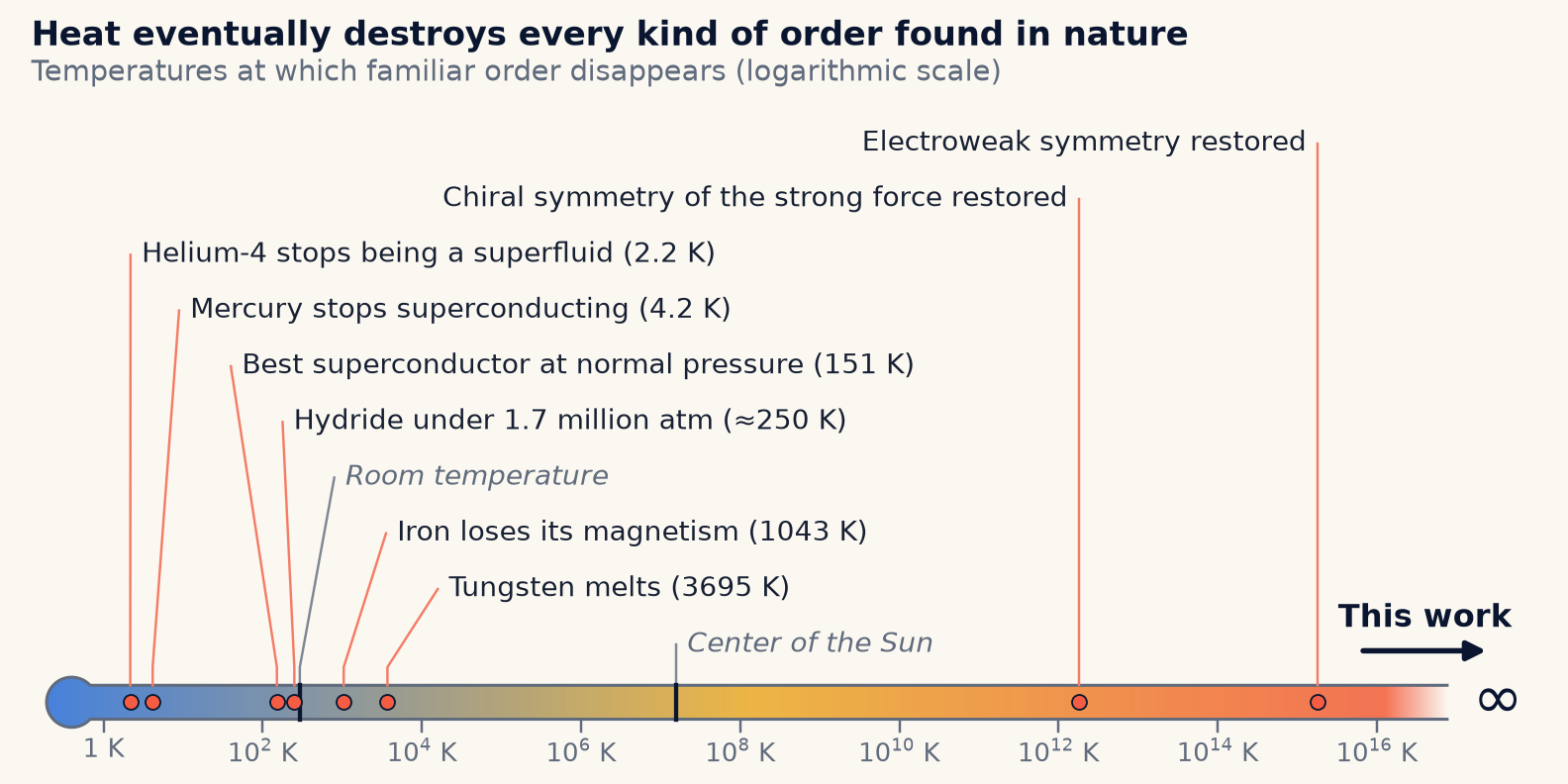
Heat usually restores symmetry: magnets lose their magnetism and superconductors stop superconducting when warmed. Building on a construction by Chaudhuri, Choi and Rabinovici that needs infinitely many fields, Sven Harder and Adar Sharon (2026) recently presented quantum field theories with finitely many fields that stay in a symmetry-broken, superfluid state at every temperature.
Key papers
- Fermionic symmetry protected topological phases and cobordismsA. Kapustin, R. Thorngren, A. Turzillo, Z. Wang · (2014). arXiv:1406.7329
- Exploring 2-group global symmetriesC. Córdova, T. T. Dumitrescu, K. Intriligator · (2018). arXiv:1802.04790
- Fusion category symmetry I: anomaly in-flow and gapped phasesR. Thorngren, Y. Wang · (2019). arXiv:1912.02817
- Line defect quantum numbers and anomaliesT. D. Brennan, C. Córdova, T. T. Dumitrescu · (2022). arXiv:2206.15401
- Higgs-confinement transitions in QCD from symmetry protected topological phasesT. T. Dumitrescu, P.-S. Hsin · (2023). arXiv:2312.16898
- Non-invertible symmetries in SN orbifold CFTs and holographyM. Gutperle, Y.-Y. Li, D. Rathore, K. Roumpedakis · (2024). arXiv:2405.15693
- Symmetry breaking from monopole condensation in QED3T. T. Dumitrescu, P. Niro, R. Thorngren · (2024). arXiv:2410.05366
Watch
More questions we are asking
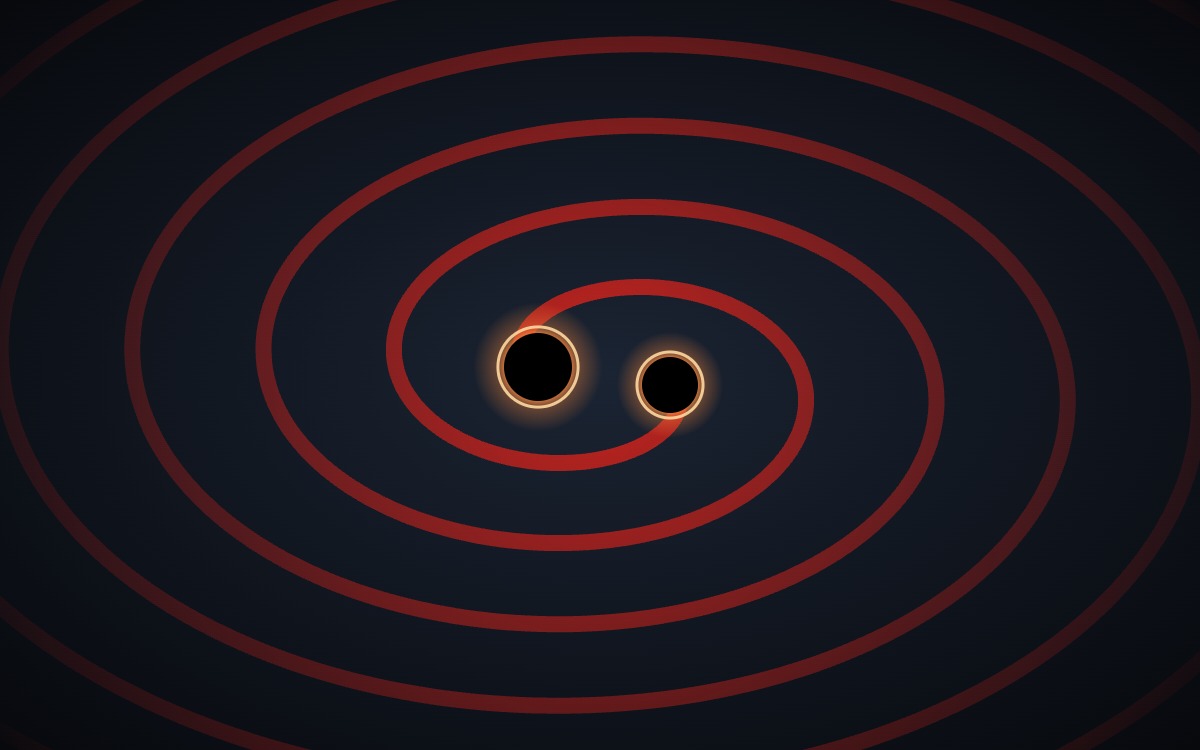 Gravity & amplitudesWhat can particle collisions teach us about colliding black holes?
 Quantum gravity & holographyWhat is spacetime made of?
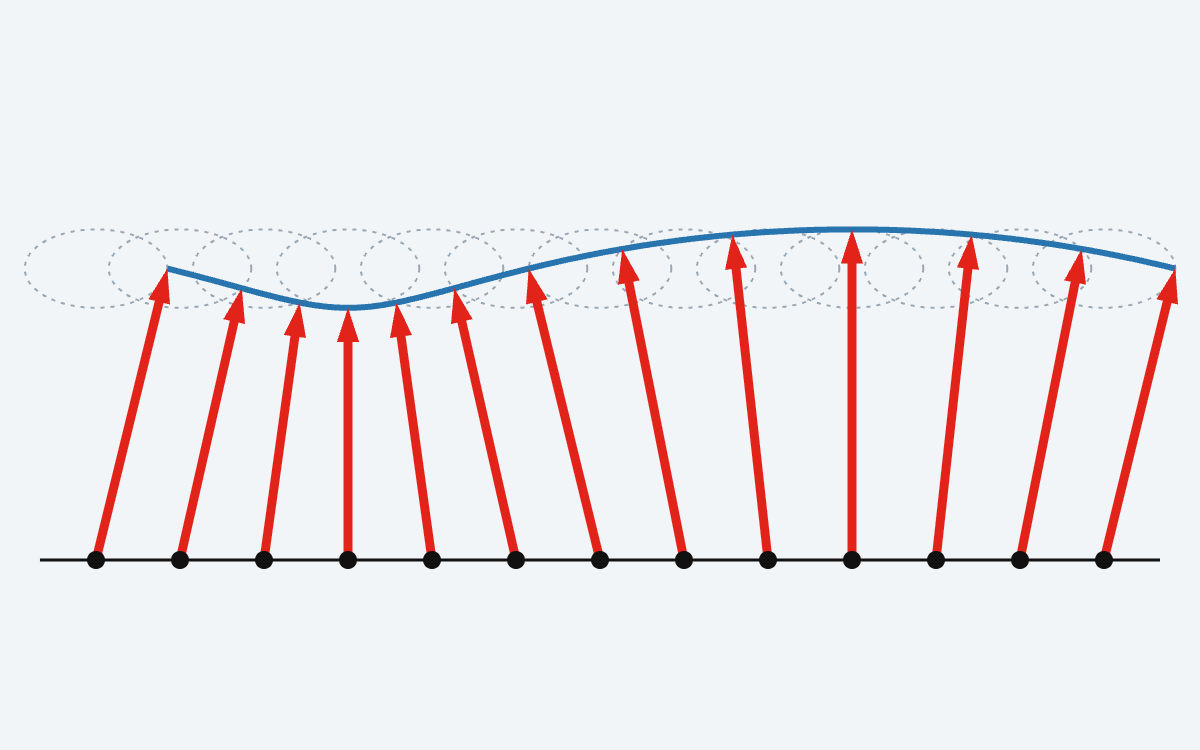 Quantum matterHow do spins, electrons and topology create new states of matter?
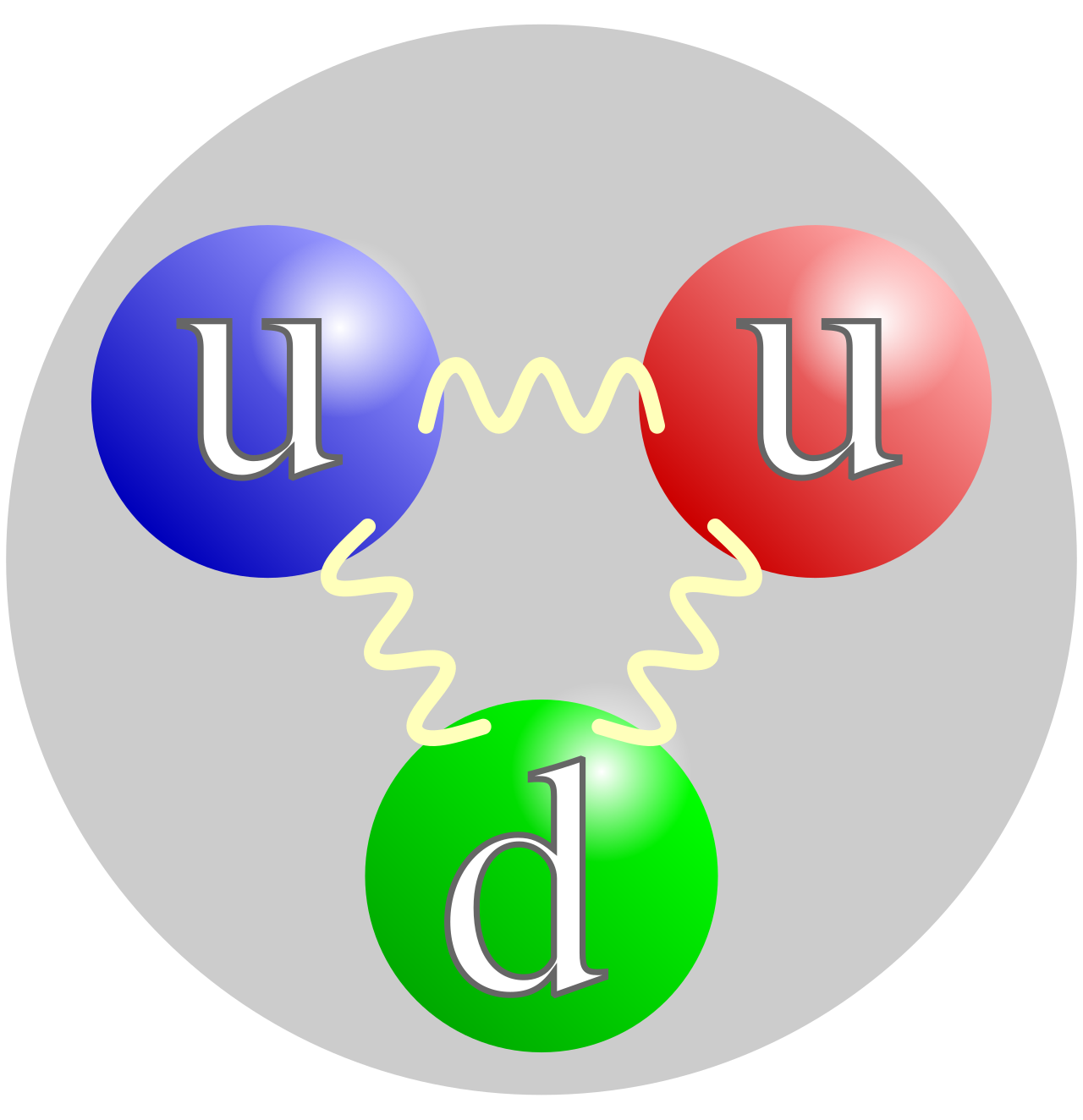 Inside the protonHow do quarks and gluons build the proton?
 Planets, stars & black holesHow does gravity's many-body dance shape the cosmos?
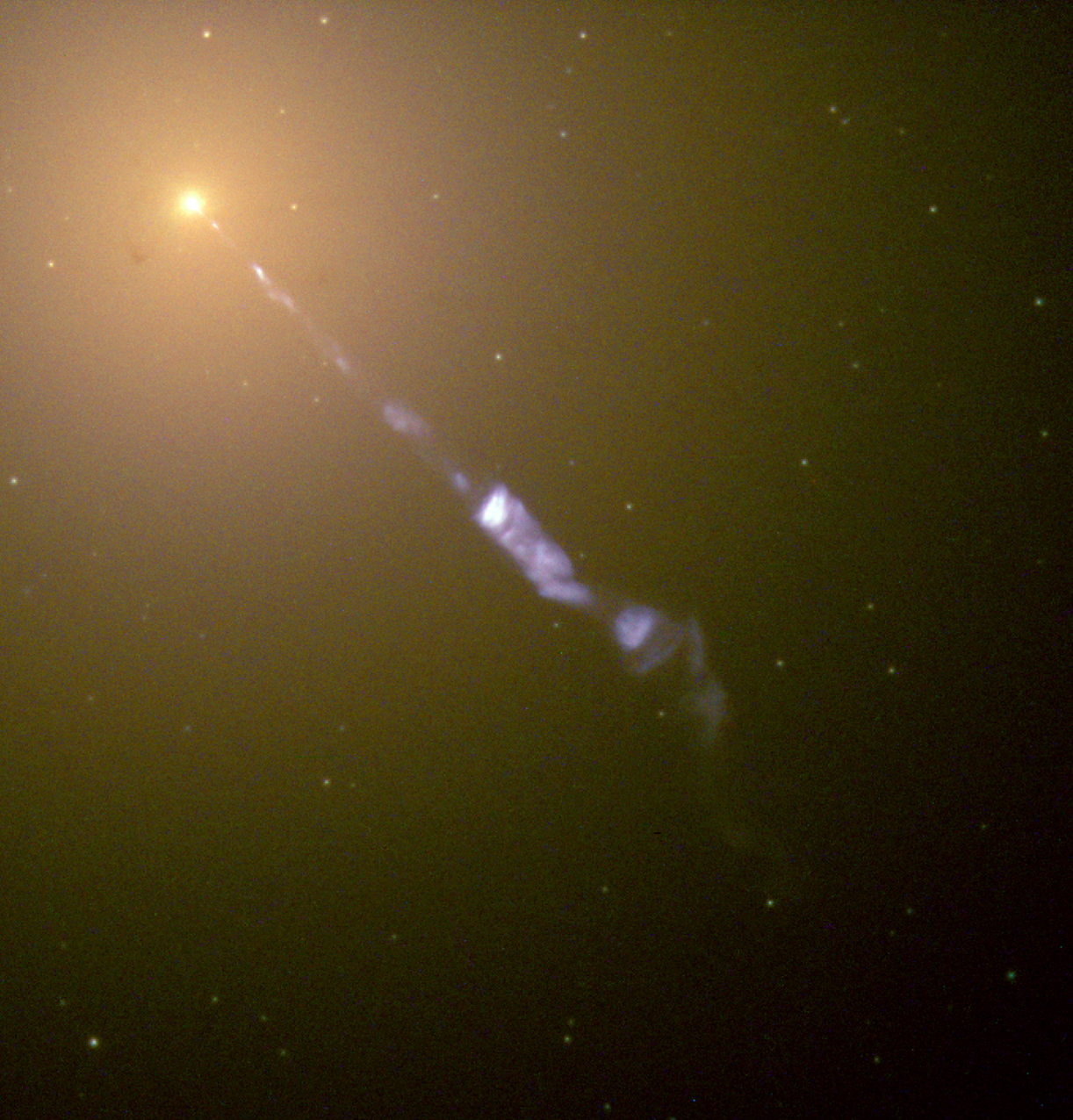 Extreme plasmasHow do cosmic plasmas make magnetic fields and cosmic rays?
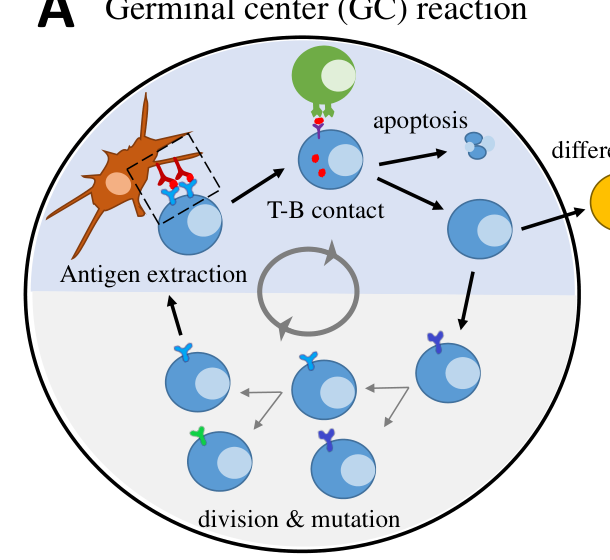 Living matterHow do living systems sense, learn and adapt?